
Description
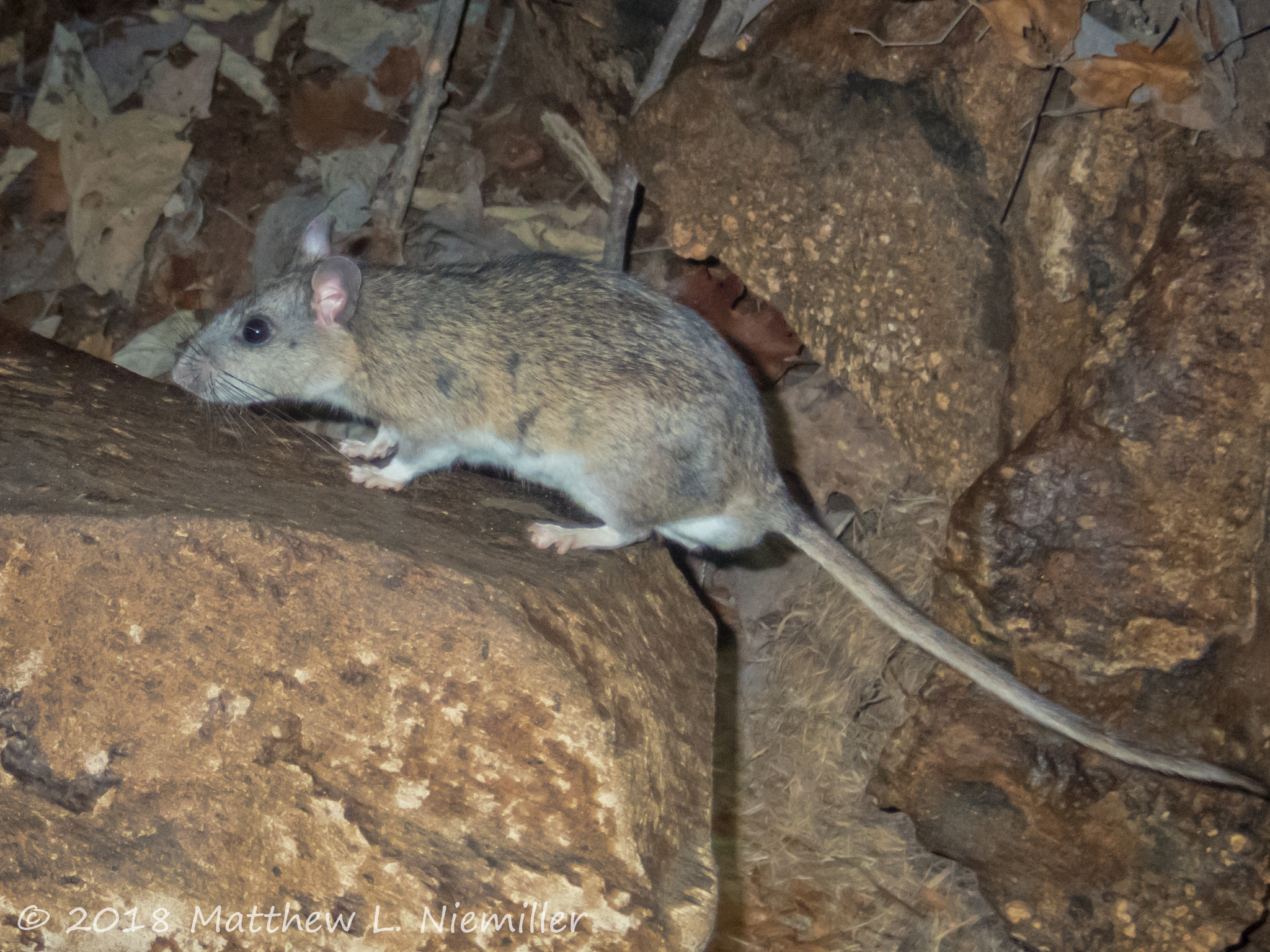
Woodrats, also sometimes called packrats, are medium-sized rodents ranging from about 20–40 centimeters in body length, with a tail nearly as long as the body. They have large, rounded ears, prominent dark eyes, long whiskers, and a somewhat bushy tail that distinguishes them from the introduced Norway Rat. Their fur is typically grayish-brown to reddish-brown above and whitish or buff below. Woodrats associated with caves, particularly the Eastern Woodrat (Neotoma floridana) and Allegheny Woodrat (Neotoma magister), are well known for building large, elaborate stick nests called middens at the entrances to caves and rock shelters.
Distribution
Woodrats are found throughout North America, with different species occupying different regions. The Eastern Woodrat ranges across the southeastern United States, while the Allegheny Woodrat inhabits rocky outcrops and cave regions of the Appalachians from New Jersey and Pennsylvania south to North Carolina and Tennessee and northern Alabama. Both species are closely associated with limestone outcrops, bluffs, and cave entrances.
Habitat
Cave-associated woodrats prefer rocky habitats, such as cliff faces, boulder fields, cave entrances, and rock shelters, where they can build their stick middens in protected alcoves. They use caves primarily as nest sites rather than living in the deep interior. They are most active at night and require a mosaic of rocky refuge habitat and nearby forest for foraging.
Ecology & Life History
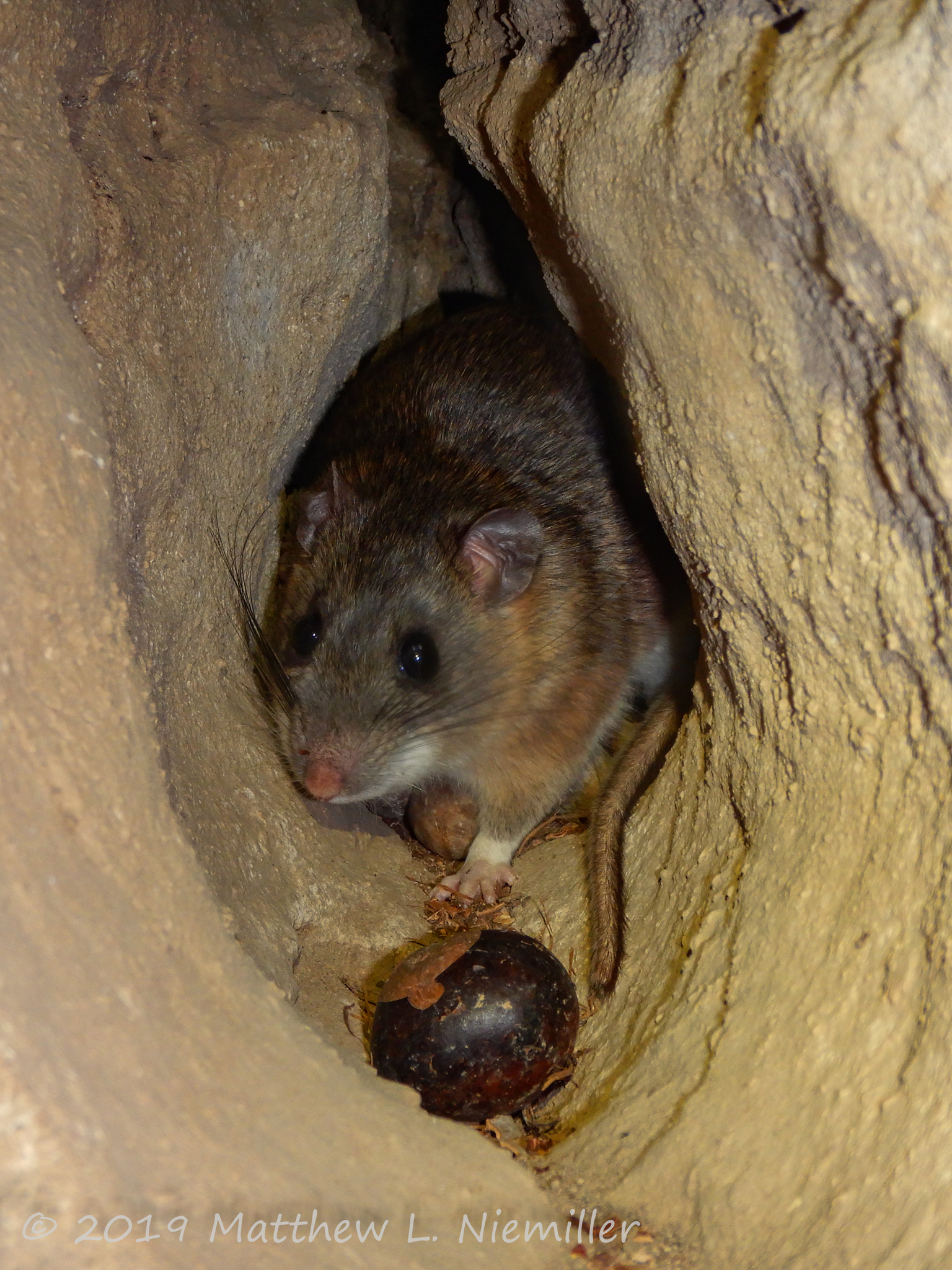
Woodrats are herbivores that feed on a wide variety of plant material including seeds, nuts, berries, fungi, and green vegetation. They are best known for their remarkable middens, which are large, conical piles of sticks, bones, animal droppings, and shiny objects like coins or foil that they collect and incorporate into their nests. These middens can persist for centuries and are valuable to scientists as records of past plant communities and climates. Woodrats also play an important ecological role by transporting nutrients into caves through their feces and urine, supporting the cave food web.
Conservation Status & Threats
Conservation status varies by species. The Eastern Woodrat is considered Least Concern overall, while the Allegheny Woodrat is a Species of Concern in many states and has declined significantly across its northern range. Key threats to the Allegheny Woodrat include habitat fragmentation, loss of food-producing trees (especially American chestnut and oak masting), and mortality from raccoon roundworm (Baylisascaris procyonis), a parasitic infection transmitted through raccoon feces near cave sites. Climate change and forest changes are also contributing to declines.