
Description
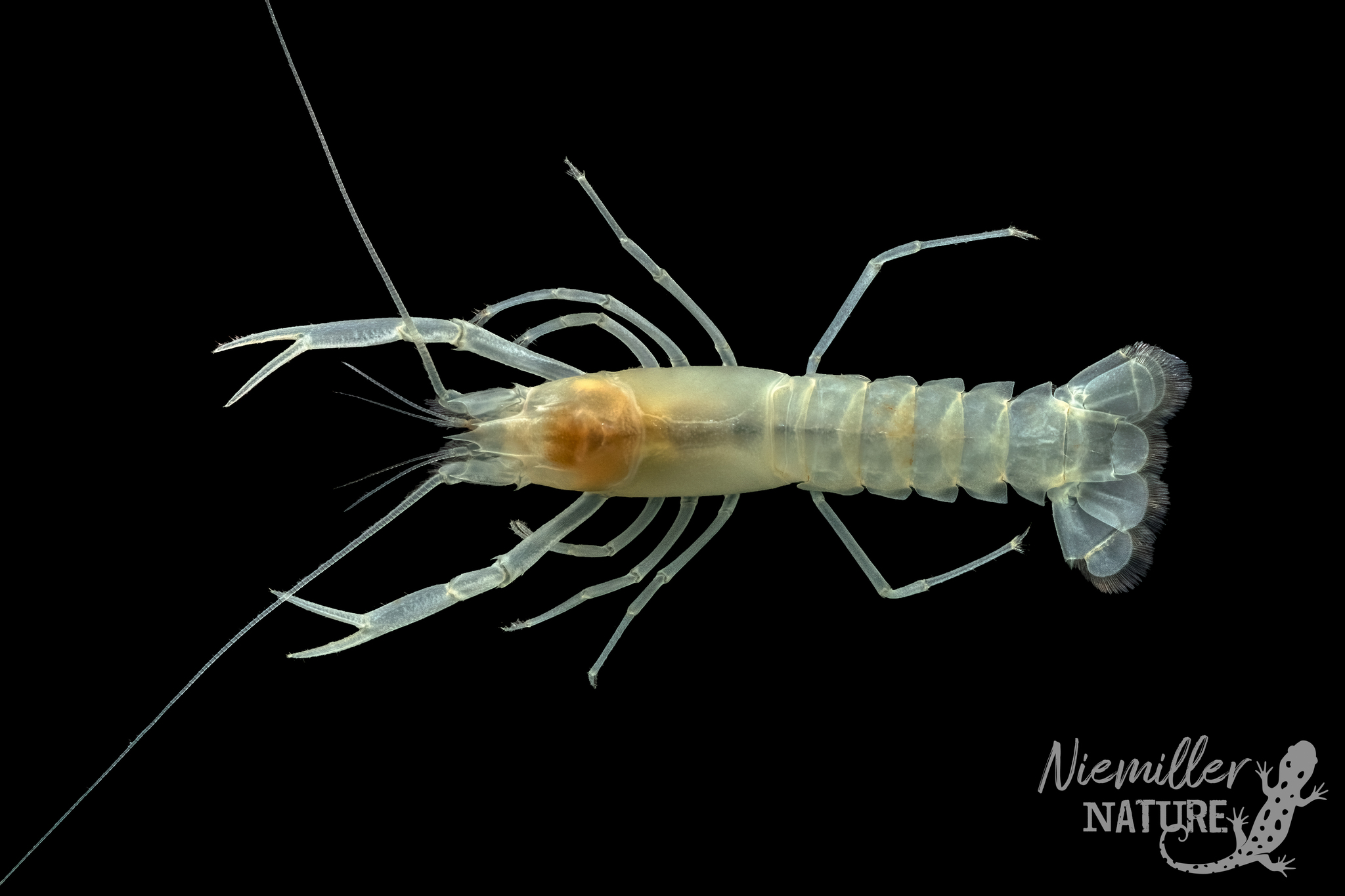
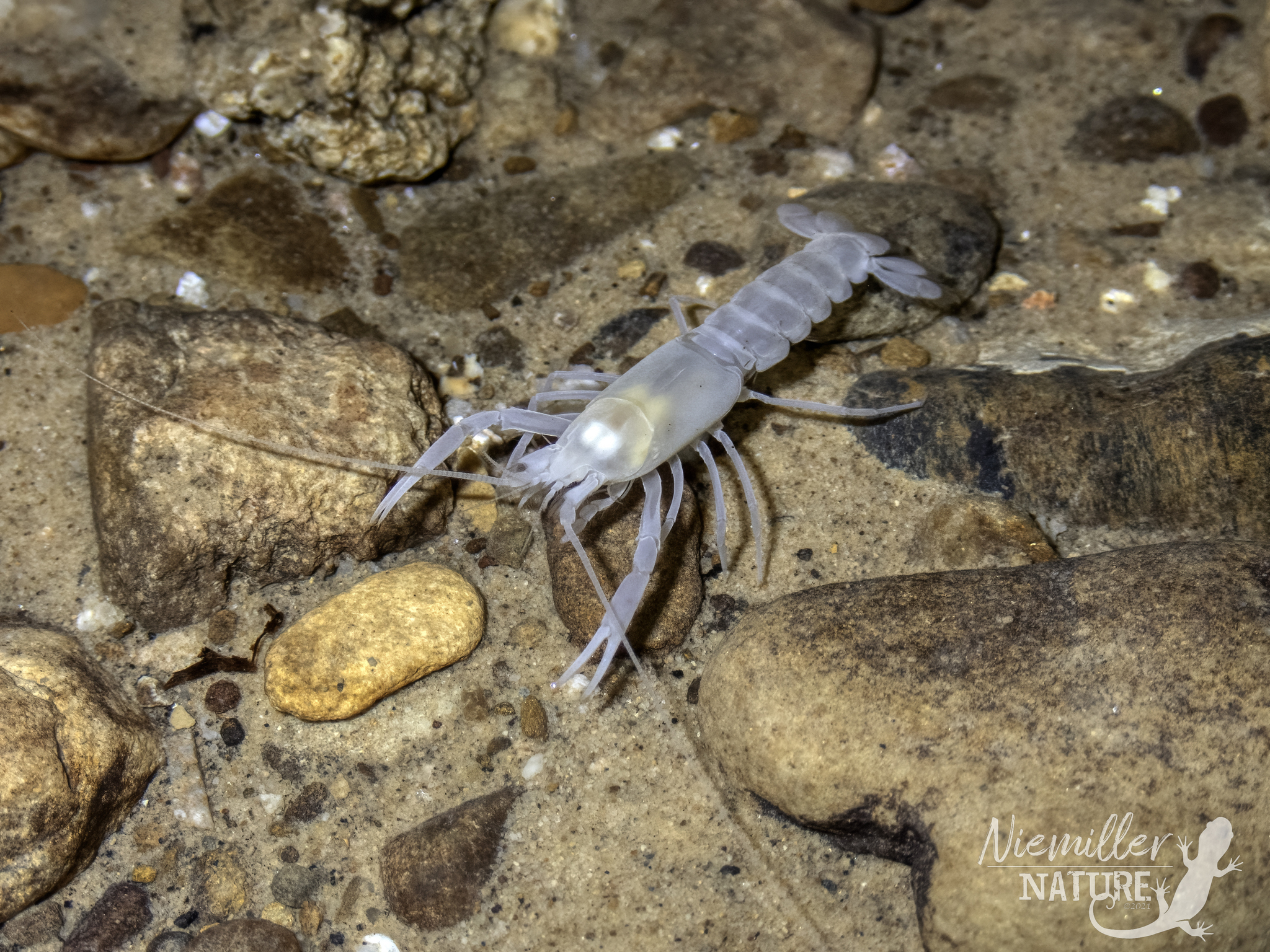
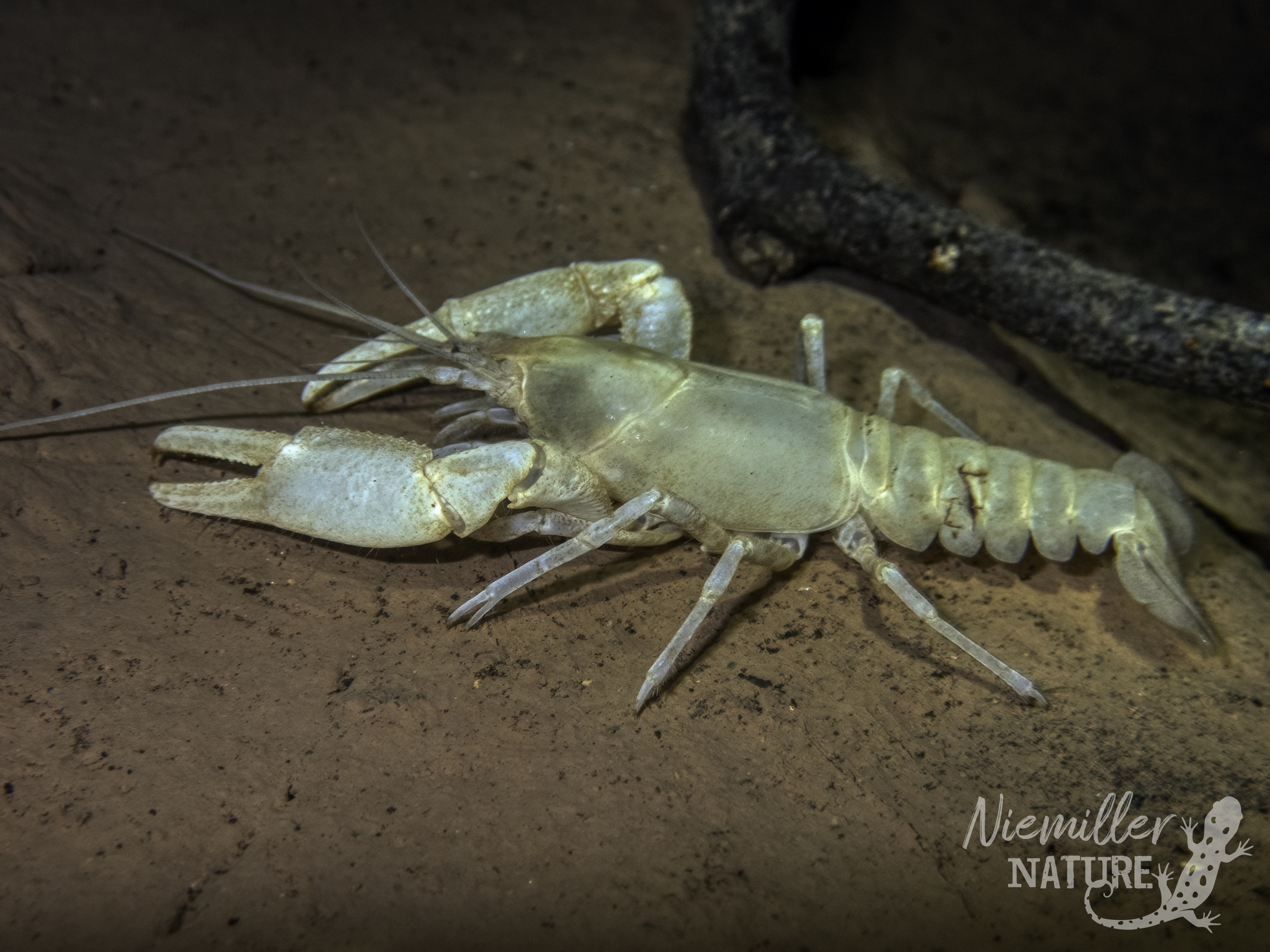
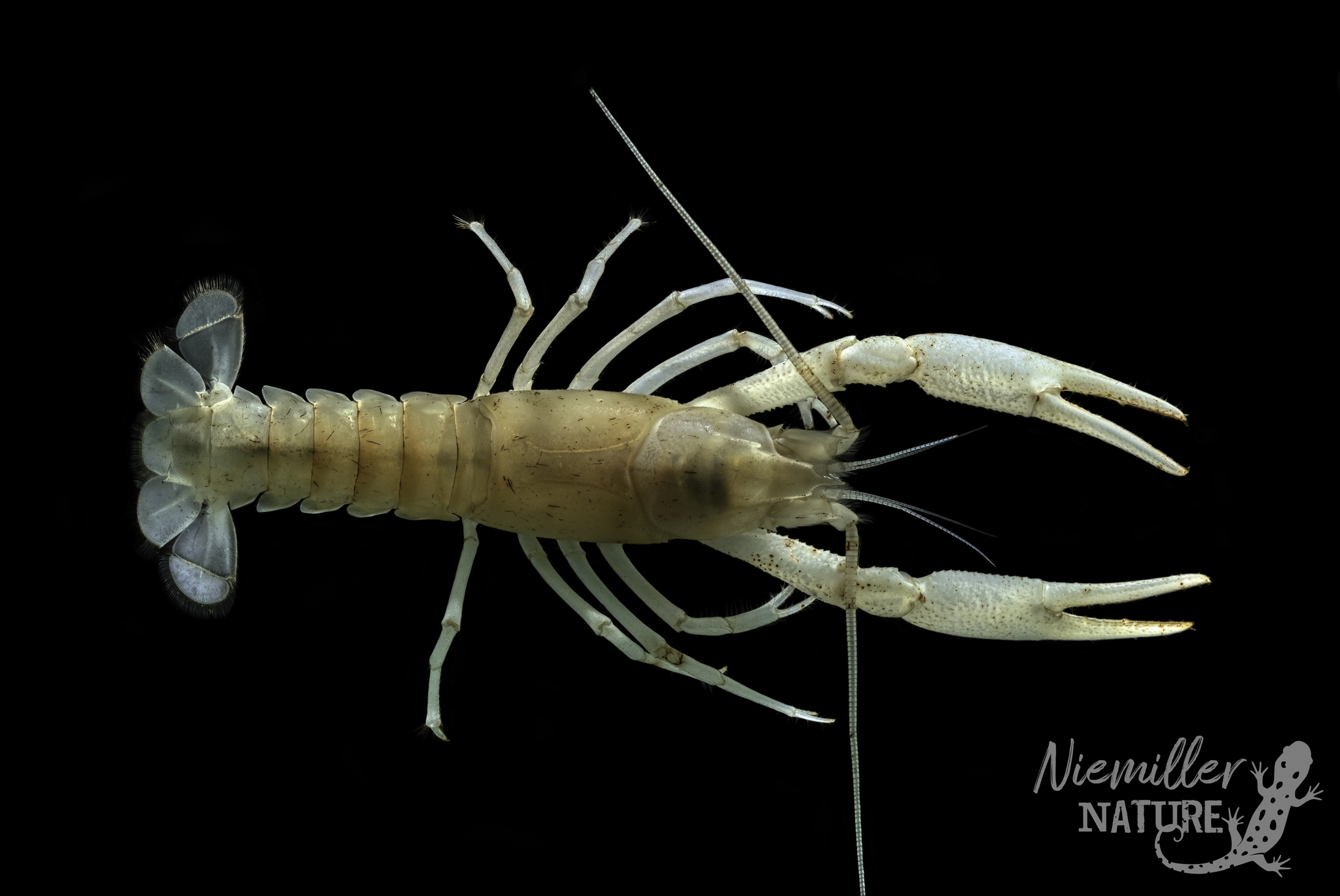
Cave crayfishes look strikingly different from their surface relatives. Their bodies are pale to nearly white or translucent, lacking the pigment that gives surface crayfishes their brown, green, or reddish colors. Their eyes are greatly reduced or completely absent, replaced by highly sensitive antennae and body hairs that detect vibrations and chemical cues in the water. Most cave crayfish are 5–10 centimeters long and resemble typical crayfish in overall body plan, with large claws and a fan-shaped tail.
The genus Cambarus includes approximately 14 obligate cave-dwelling species distributed across the Interior Low Plateau, Ozarks, and Upper Floridan Aquifer of the southeastern United States, while Orconectes, a genus now composed entirely of cave-adapted species, contains roughly 8 cave crayfish species found primarily in cave systems of the Interior Low Plateau karst region in the eastern United States.
Distribution
Cave crayfishes in the genera Cambarus and Orconectes are found in limestone karst regions of eastern North America, particularly in the Interior Low Plateau and Ozarks karst regions. Many species have extremely limited ranges with some species known from only one cave system or a connected network of underground streams. States like Alabama, Tennessee, Kentucky, Arkansas, and Missouri host particularly high diversity of cave crayfish species.
Habitat
Cave crayfishes live exclusively in subterranean aquatic environments, including underground streams, cave pools, and flooded passages in limestone karst. These stygobionts depend on clean, oxygen-rich groundwater. The water that feeds their habitat often originates on the surface, meaning pollution above ground can quickly affect the caves below.
Ecology & Life History
Cave crayfishes are omnivores and scavengers, feeding on organic particles, algae, fungi, and small invertebrates that wash into cave systems. Like other cave animals, they have very slow metabolisms and can survive long periods without food, which is an essential adaptation in an environment where meals may be rare. They grow slowly, live for many years, and produce small numbers of young. Cave crayfishes play an important role as both prey (for cavefishes and other predators) and consumers in the underground aquatic food web.
Conservation Status & Threats
Some cave crayfish species are federally listed as Threatened or Endangered in the United States, while several others are state-listed or considered species of concern. Their greatest threats include groundwater contamination from agricultural runoff, septic systems, and surface development; habitat destruction through quarrying or hydrological changes; and drought or altered water flow caused by climate change and groundwater pumping. Because most species live in tiny, isolated populations, even a single pollution event can threaten an entire species.