Description
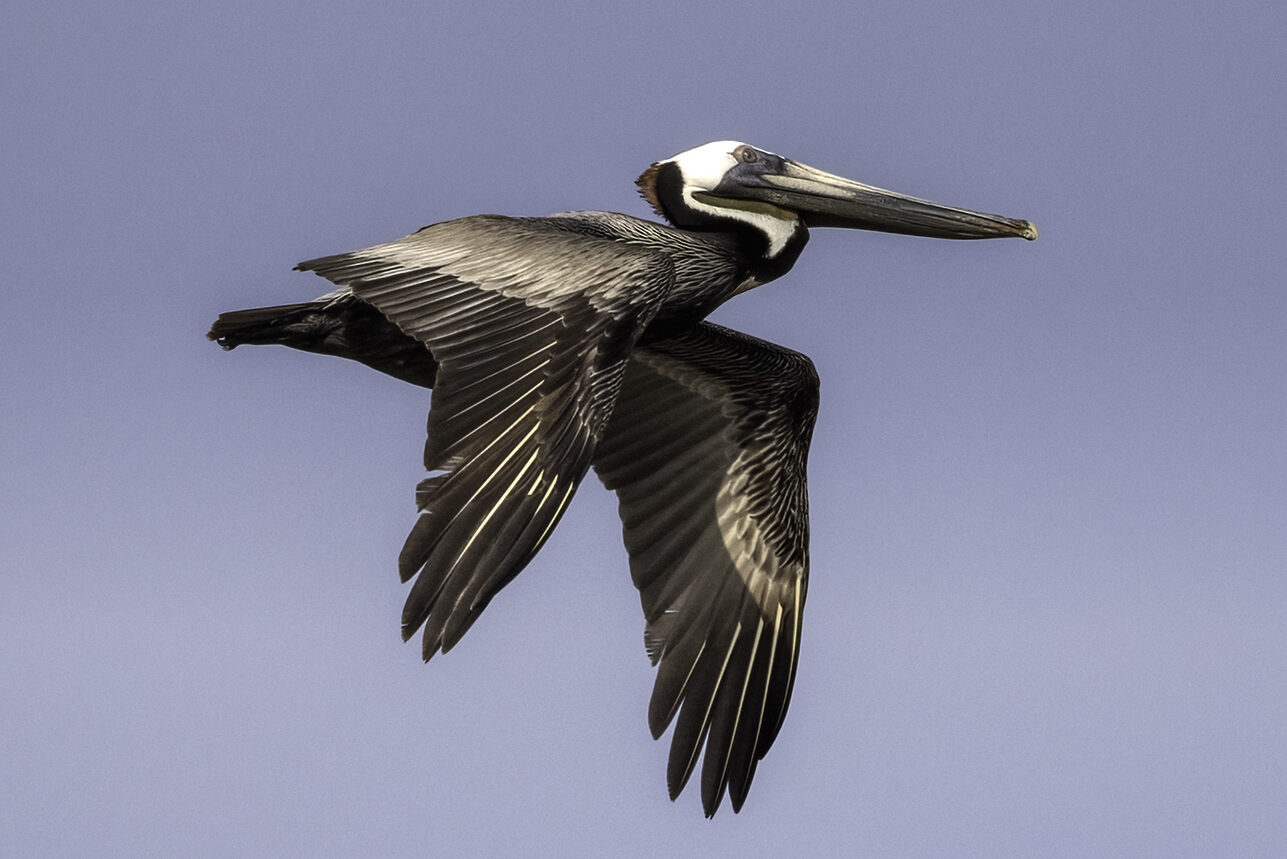
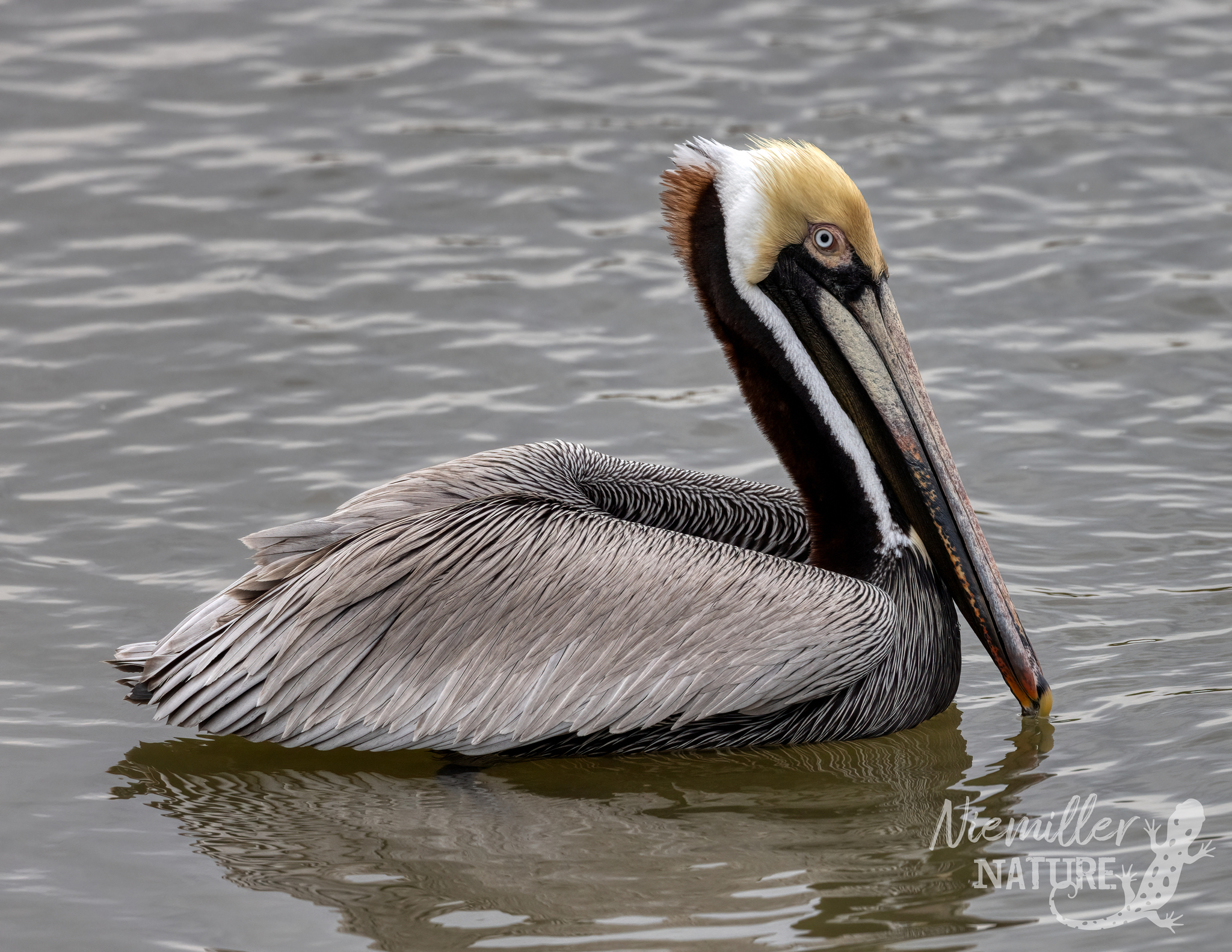
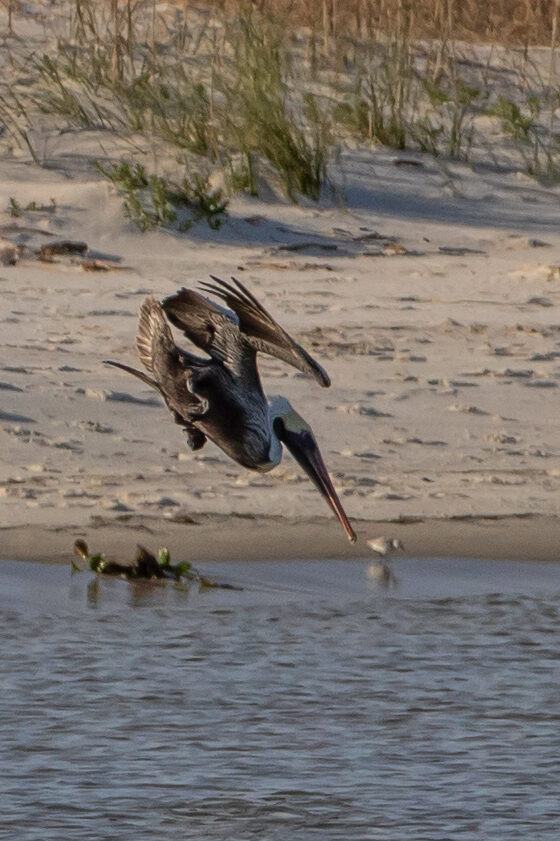
The Brown Pelican is a large, distinctive seabird with a wingspan of nearly 2 meters (6.5 feet). Its body is brown-gray with a white and yellow head, and it sports a large, stretchy throat pouch beneath its long bill that can hold up to three times more than its stomach. Brown pelicans are most famous for their dramatic hunting behavior: they circle over the water and then plunge-dive from heights of up to 10 meters, hitting the water with a controlled crash and scooping fish into their pouch on impact. Despite their ungainly appearance on land, they are graceful in the air.
Distribution
Brown Pelicans are found along the Atlantic, Gulf, and Pacific coasts of North America and into the Caribbean and South America. On the Gulf Coast, they are year-round residents and one of the most recognizable birds of coastal piers, jetties, beaches, and bays. They nest in large colonies on offshore barrier islands and mangrove islands throughout the Gulf of Mexico/America.
Habitat
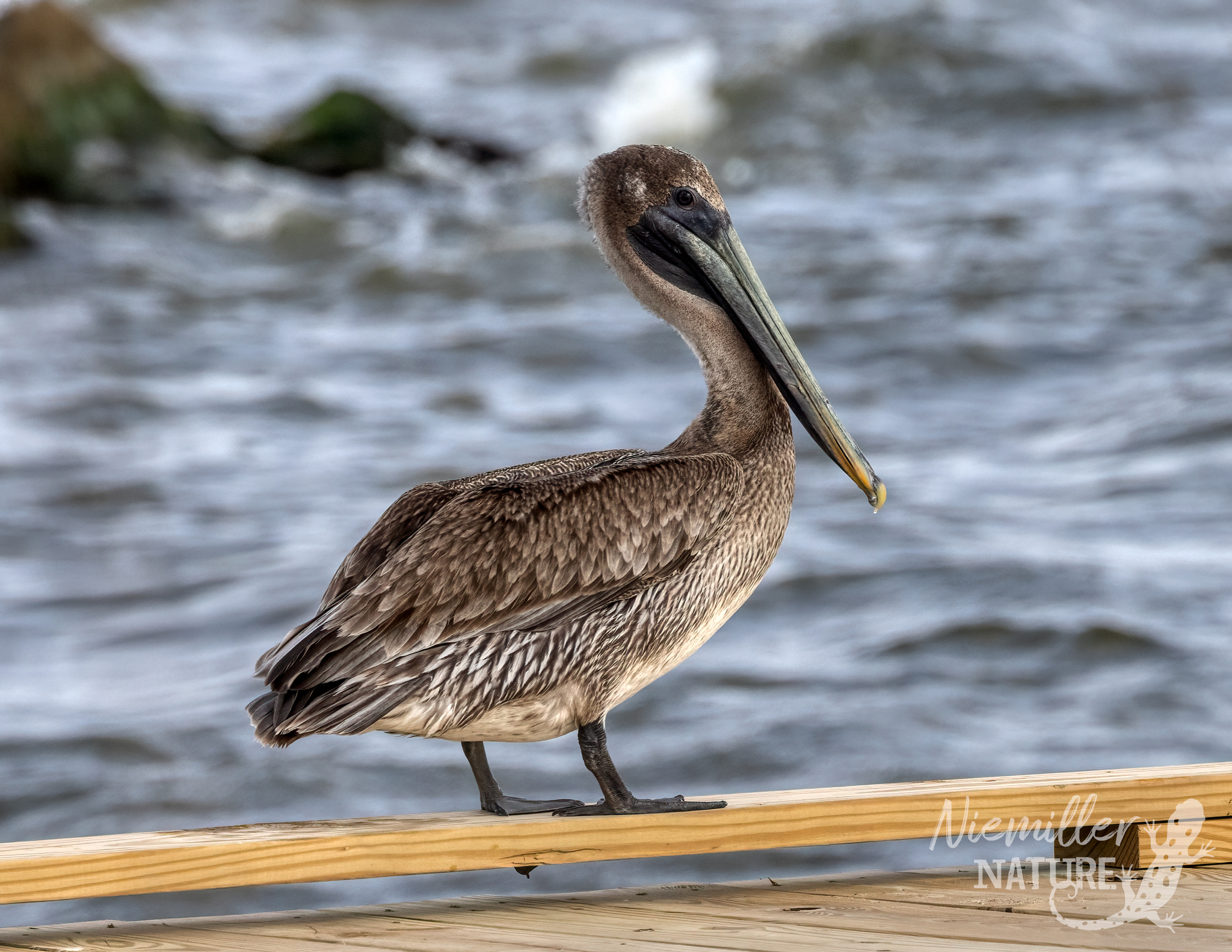
Brown Pelicans live in coastal marine environments, including open bays, lagoons, estuaries, and nearshore ocean waters. They require proximity to both productive fishing waters and predator-free nesting sites, which are typically low-lying offshore islands with few terrestrial predators. They roost on buoys, dock pilings, and jetties and are a common sight around fishing piers, where they often wait for discarded scraps.
Ecology & Life History
Brown Pelicans feed almost exclusively on fish, particularly menhaden, mullet, and anchovies. Their plunge-dive technique is unique among North American pelicans. All other species feed from the surface. The impact of a dive can stun fish in the surrounding water. They breed in large, dense colonies, with both parents sharing incubation and chick-rearing duties. Chicks are fed regurgitated fish directly from the parent’s pouch. Pelicans are long-lived birds, surviving up to 25 years in the wild.
Conservation Status & Threats
The Brown Pelican was listed as Endangered under the U.S. Endangered Species Act in 1970 after pesticide contamination, particularly DDT, caused catastrophic eggshell thinning and reproductive failure. Following the ban on DDT in 1972, the species recovered dramatically and was removed from the Endangered Species list in 2009, making it one of conservation’s greatest success stories. Ongoing threats include oil spills (the 2010 Deepwater Horizon disaster heavily impacted Gulf Coast nesting colonies), fishing line entanglement, habitat loss, and human disturbance at nesting colonies.