Description
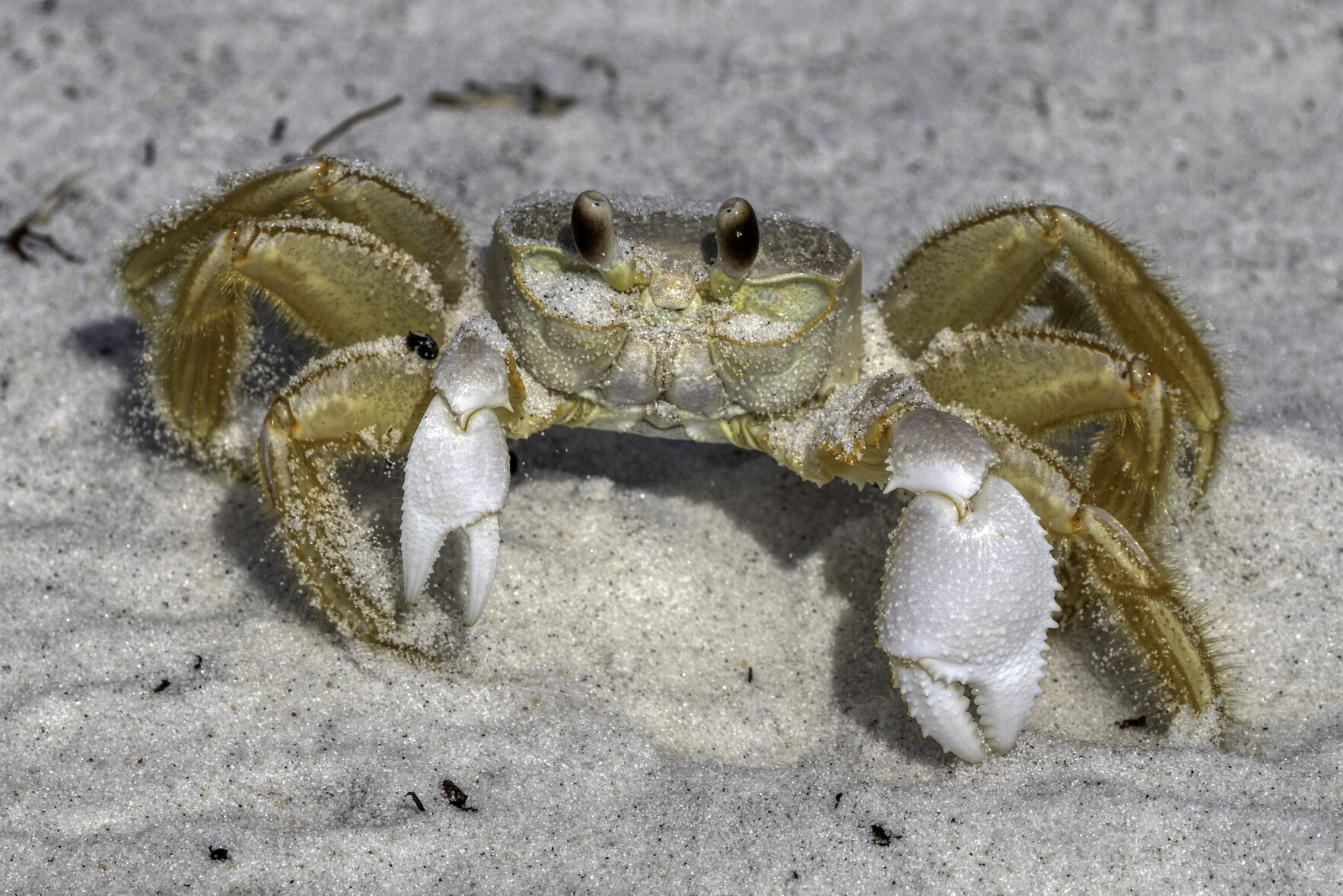
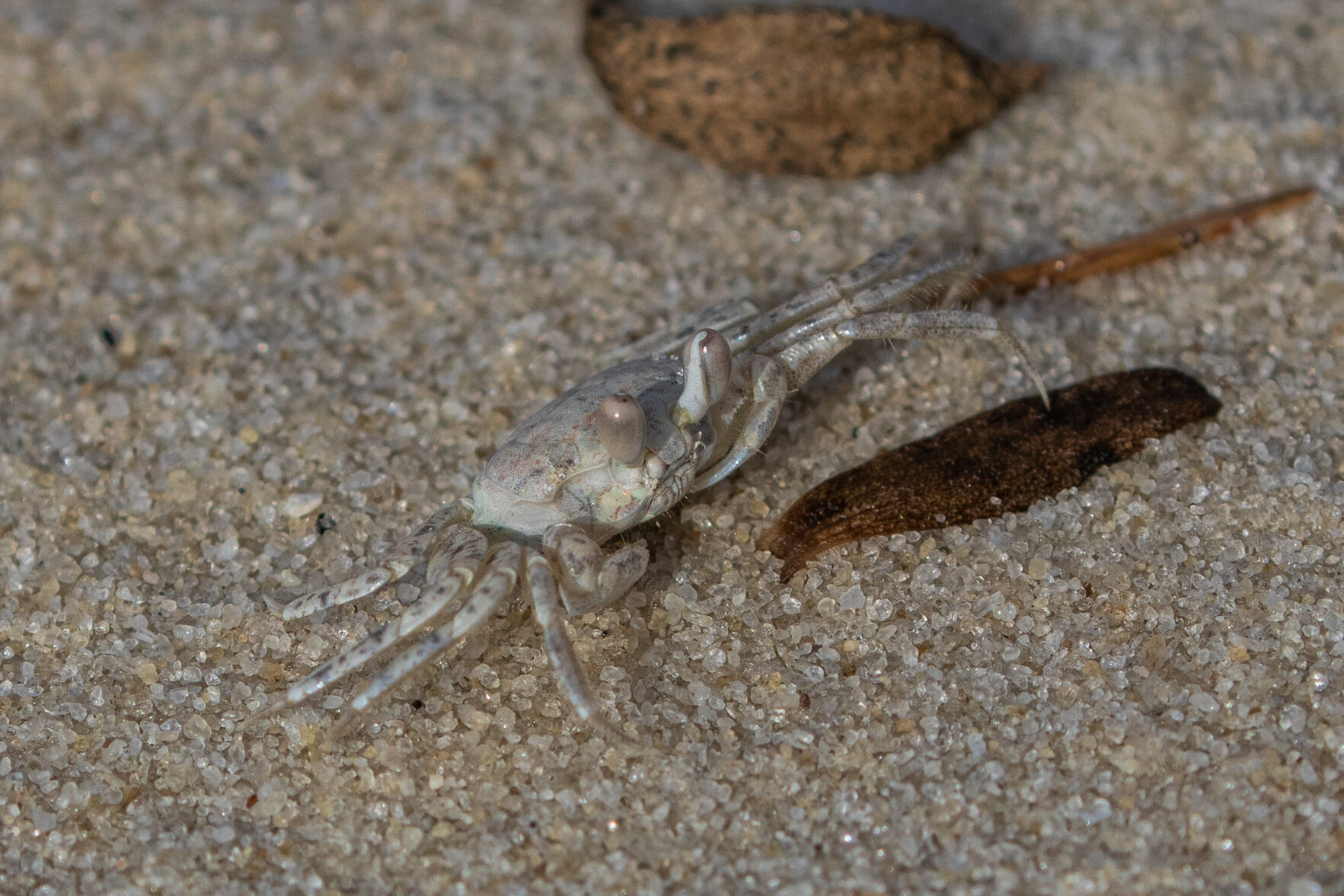
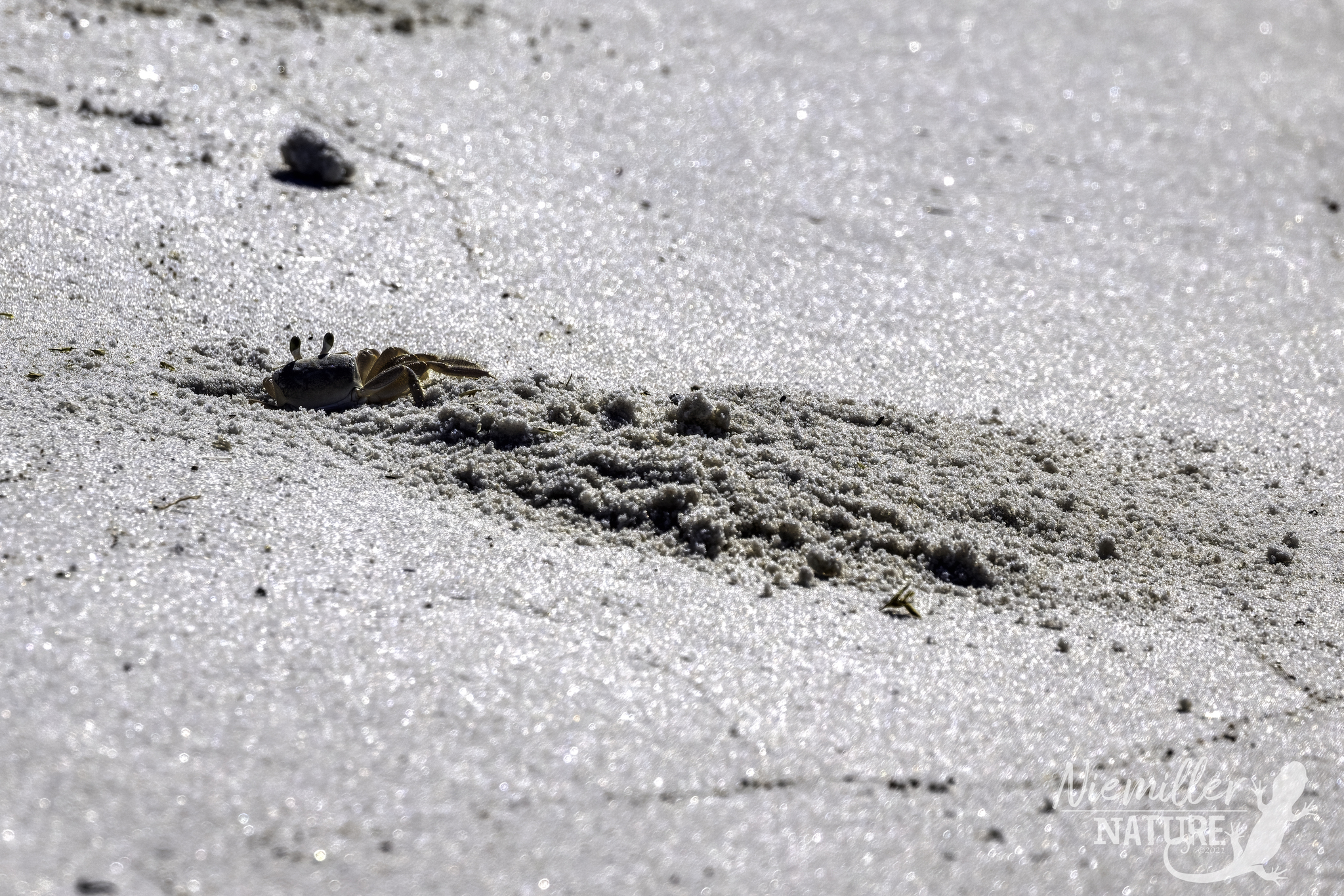
The Atlantic Ghost Crab is a semi-terrestrial crab with a boxy, sand-colored body that measures up to about 2 inches (~5 centimeters) across the carapace. Its pale, sandy-yellow coloration provides excellent camouflage on the beach. Ghost Crabs have stalked eyes that can rotate nearly 360 degrees and are retracted into special grooves when the crab burrows. They are exceptionally fast runners capable of reaching speeds of up to 10 miles per hour (16 kilometers per hour). They also can change direction instantly, seeming to vanish before your eyes, which is how they earned the name ‘ghost crab.’
Distribution
Atlantic Ghost Crabs are found along sandy beaches from Rhode Island and the coast of Massachusetts south through the Gulf of Mexico/America, the Caribbean, and along the Atlantic Coast of South America to Brazil. On the Gulf Coast, they are abundant on undisturbed sandy beaches from Florida to Texas. They are one of the most familiar and active visible animals on Gulf Coast shorelines.
Habitat
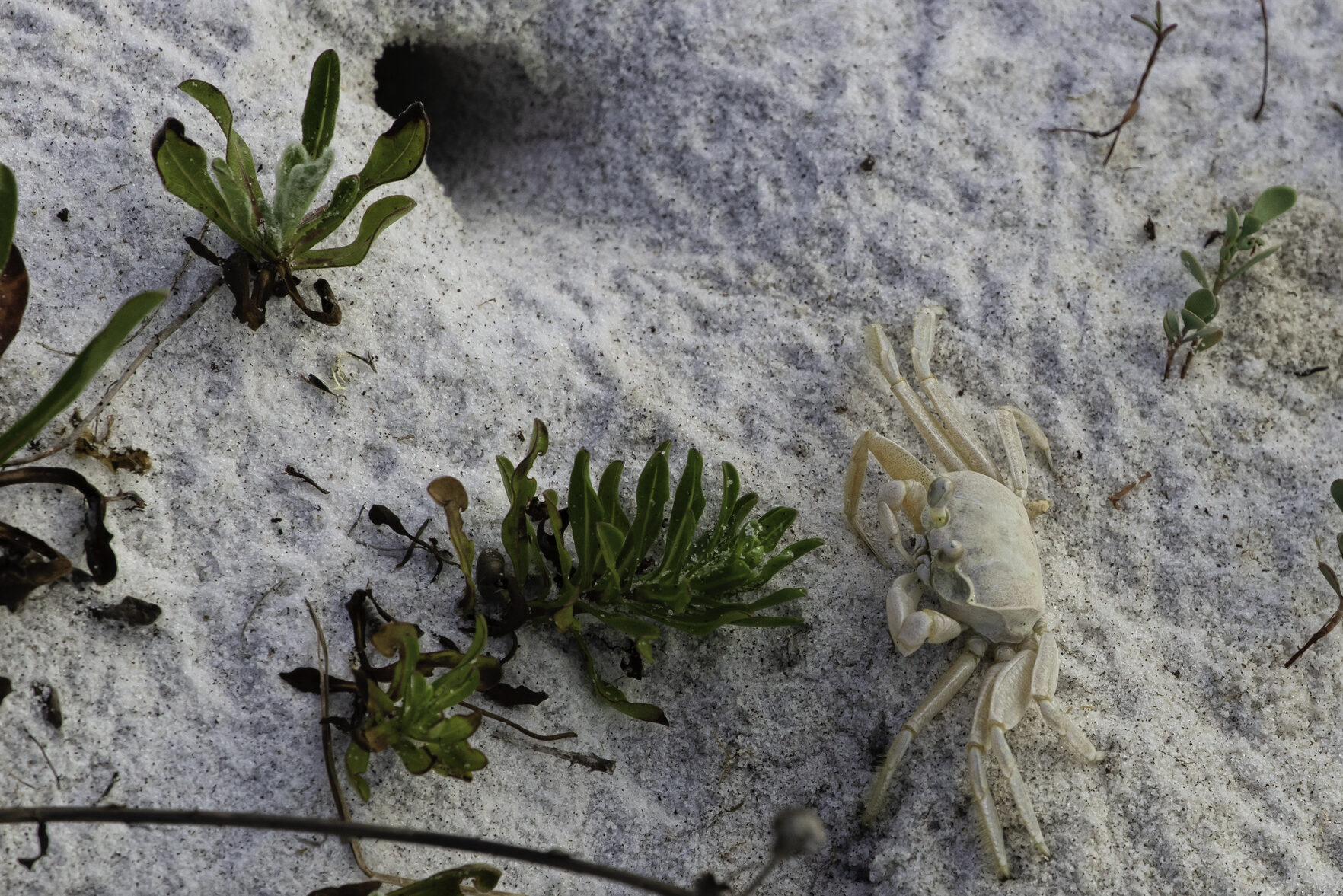
Ghost crabs are creatures of the upper beach. They burrow in the dry sand above the high-tide line, often well up into the dune zone. Their burrows can reach depths of ~4 feet (1.2 meters) and provide refuge from heat, predators, and waves. They are primarily nocturnal, becoming most active after dark, though they can often be spotted at dawn and dusk. They must return to the ocean periodically to wet their gills.
Ecology & Life History
Ghost Crabs are opportunistic omnivores and scavengers, feeding on mole crabs, coquina clams, beach hoppers, sea turtle eggs, carrion, and organic debris. They play an important ecological role as scavengers, cleaning up dead material on beaches. They are preyed upon by shorebirds, raccoons, foxes, and large fish in the surf zone. The density and distribution of ghost crab burrows is used by scientists as an indicator of overall beach health and the degree of human disturbance.
Conservation Status & Threats
Atlantic Ghost Crabs are not listed as threatened or endangered and are generally considered abundant. However, they are highly sensitive to beach disturbance. Off-road vehicle (ORV) traffic on beaches directly destroys burrows and kills crabs. Beach raking, artificial lighting (which disorients adults and sea turtle hatchlings alike), and coastal armoring that eliminates sandy beach habitat all negatively affect ghost crab populations. Because ghost crab burrow density reflects beach health, declining populations can signal broader ecosystem problems.