Description
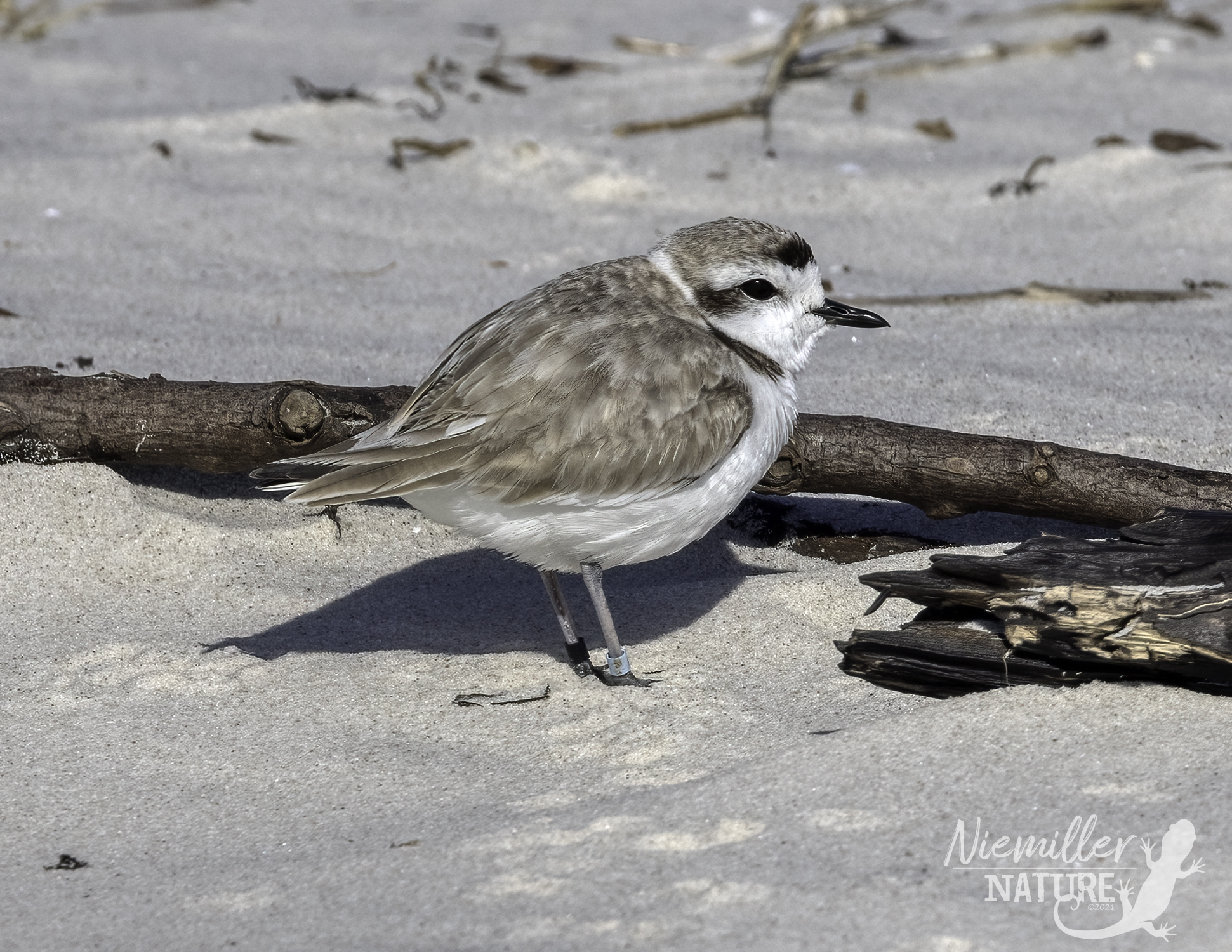
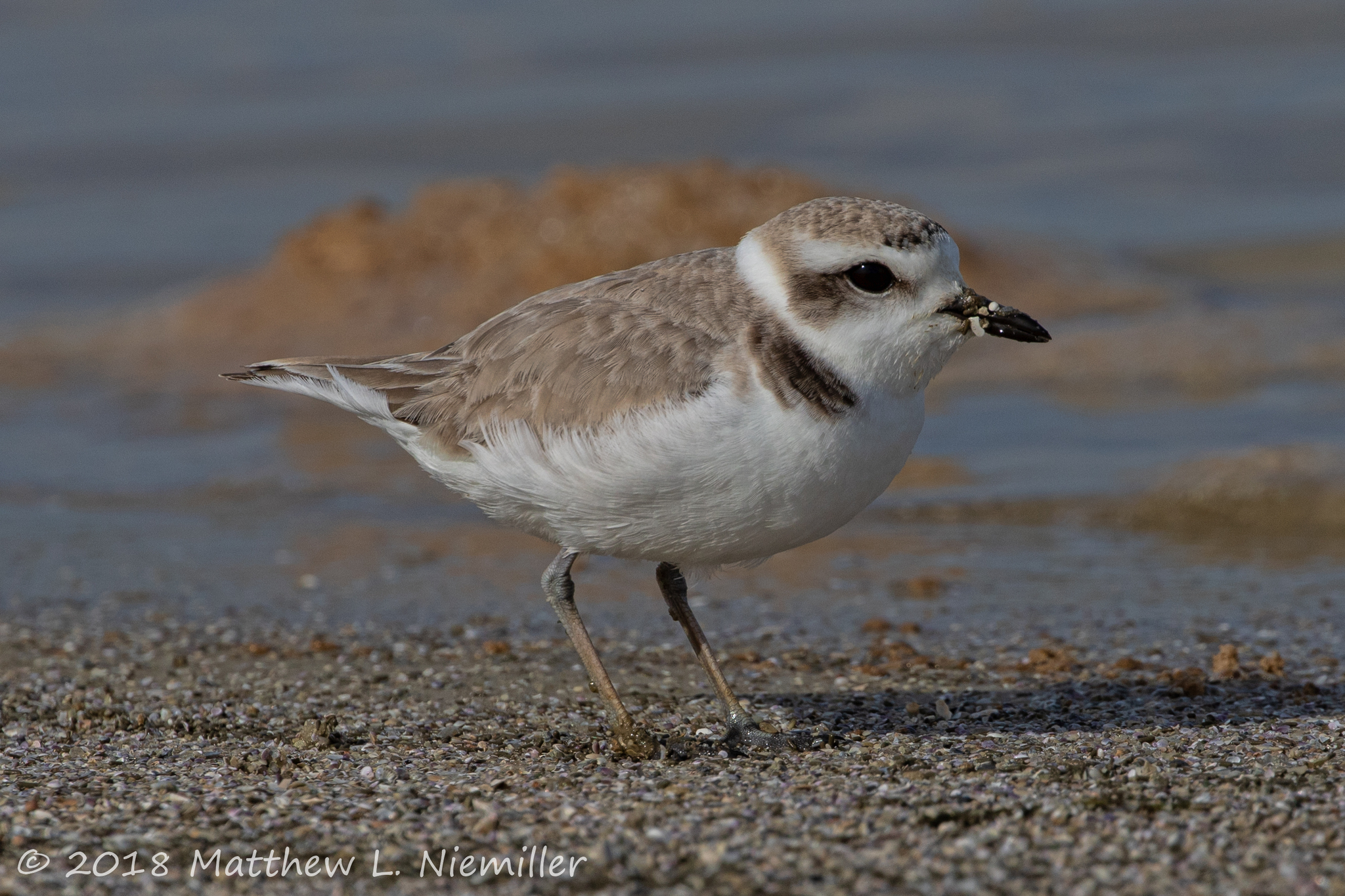
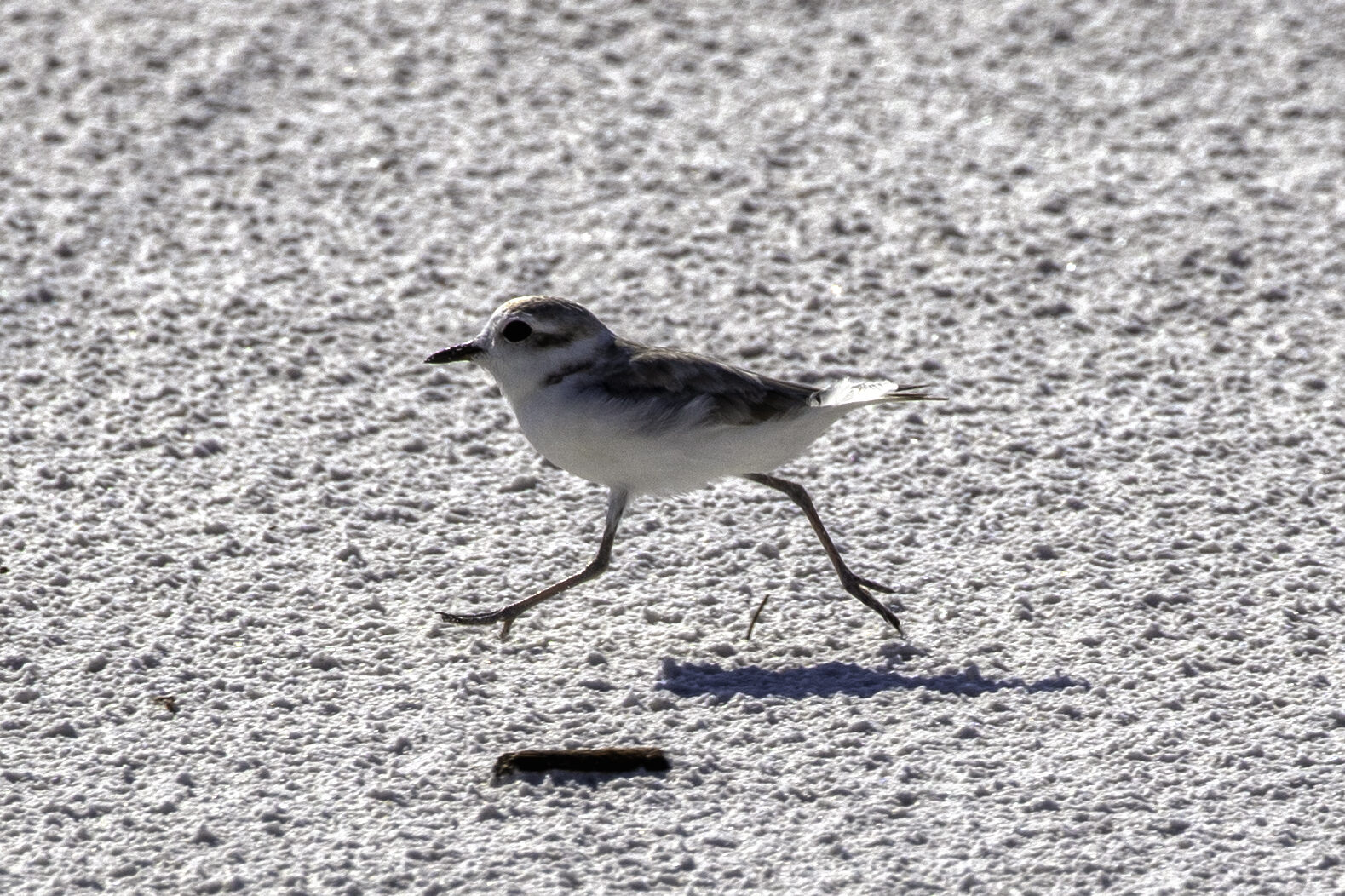
The Snowy Plover is a small, delicate shorebird about 5.9–6.7 inches (15–17 centimeters) in length and a wingspan up to 13.4 inches (34 centimeters), roughly the size of a sparrow. It is pale sandy-brown on top and white below, with distinctive black patches on the sides of the breast (rather than a complete breast band) and a narrow black bar on the forehead. Its bill is slim, dark, and slightly drooped, and its legs are pale gray or flesh-colored. The Snowy Plover’s cryptic coloring allows it to blend almost perfectly with dry sand, making it extremely difficult to spot unless it moves.
Distribution
Snowy Plovers are found across western North America from the Pacific Coast through the interior west, as well as along the Gulf Coast from Florida to Texas. The Gulf Coast population is largely non-migratory and lives year-round on Gulf beaches. The Pacific Coast population is listed as a federally threatened species under a separate subspecies designation. The Gulf Coast birds are monitored closely as a distinct breeding population facing significant habitat loss.
Habitat
Snowy Plovers nest and forage on flat, open sandy habitats with sparse vegetation, including ocean beaches, coastal dunes, salt flats, and the shores of coastal ponds and bays. They require open sightlines to detect approaching predators. They nest directly on the bare sand or gravel, laying eggs in a small scrape that is sometimes lined with shell fragments. The nest has virtually no structure and the eggs are cryptically colored to match the substrate.
Ecology & Life History
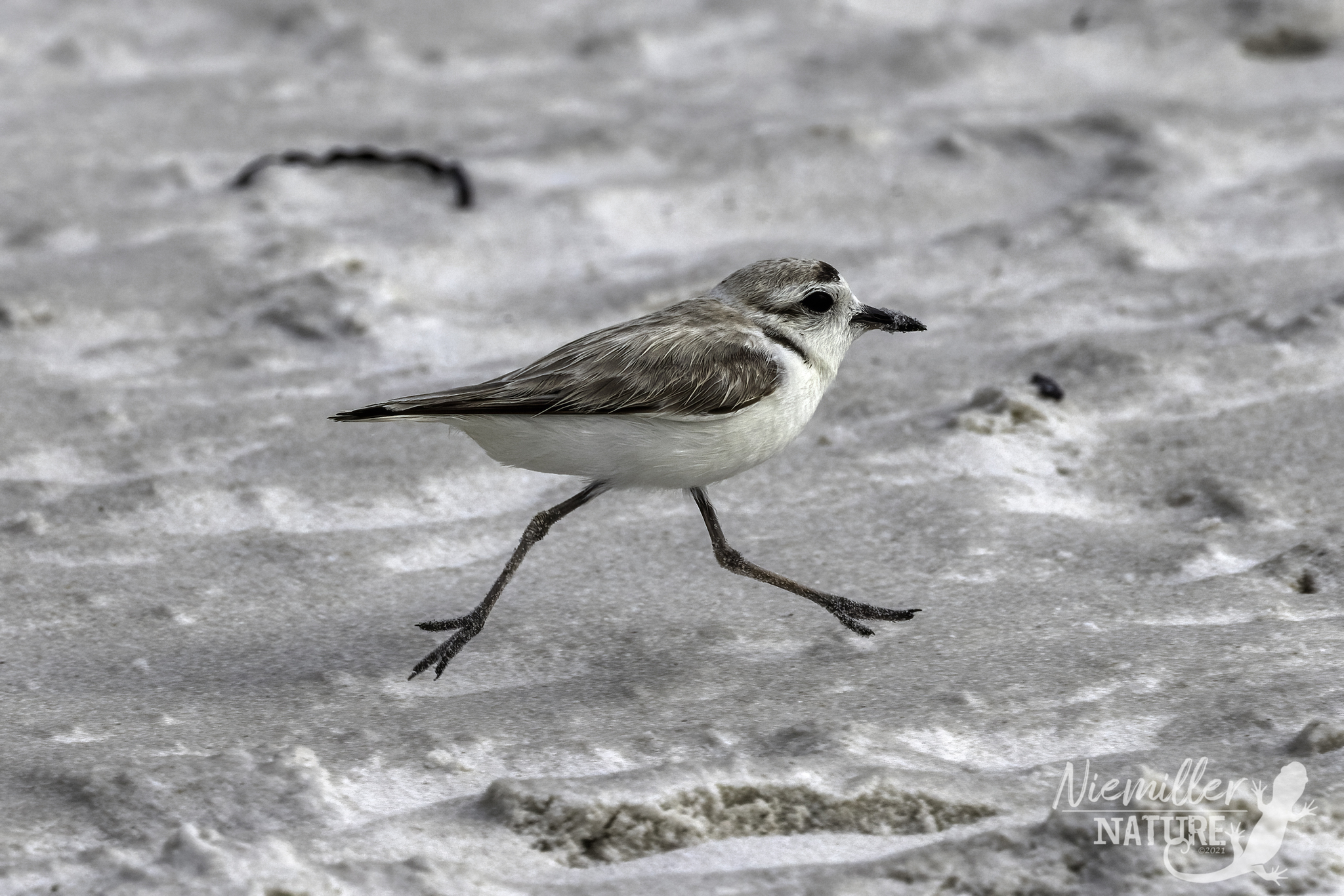
Snowy Plovers forage by running across the sand in short dashes, stopping to pick up small invertebrates, such as sand crabs, marine worms, insects, and small crustaceans, from the surface or just below it. They are well-known for their broken-wing display. When a predator approaches the nest, the adult plover runs away from the eggs while dragging a wing along the ground, mimicking an injury to lure the threat away. Chicks are precocial, meaning they hatch with eyes open, covered in down, and are mobile within hours of hatching.
Conservation Status & Threats
The Snowy Plover is classified as Near Threatened by the IUCN, and the Gulf Coast breeding population is considered a state-designated threatened species in Florida. Major threats include human foot traffic and off-road vehicle use on nesting beaches, which crushes eggs and disturbs incubating adults. Coastal development has eliminated large areas of suitable nesting habitat. Predators such as crows, raccoons, foxes, and ghost crabs take eggs and chicks. Rising sea levels from climate change threaten low-lying nesting beaches. Conservation actions include posting nesting areas, predator management, and public education programs.