
Description
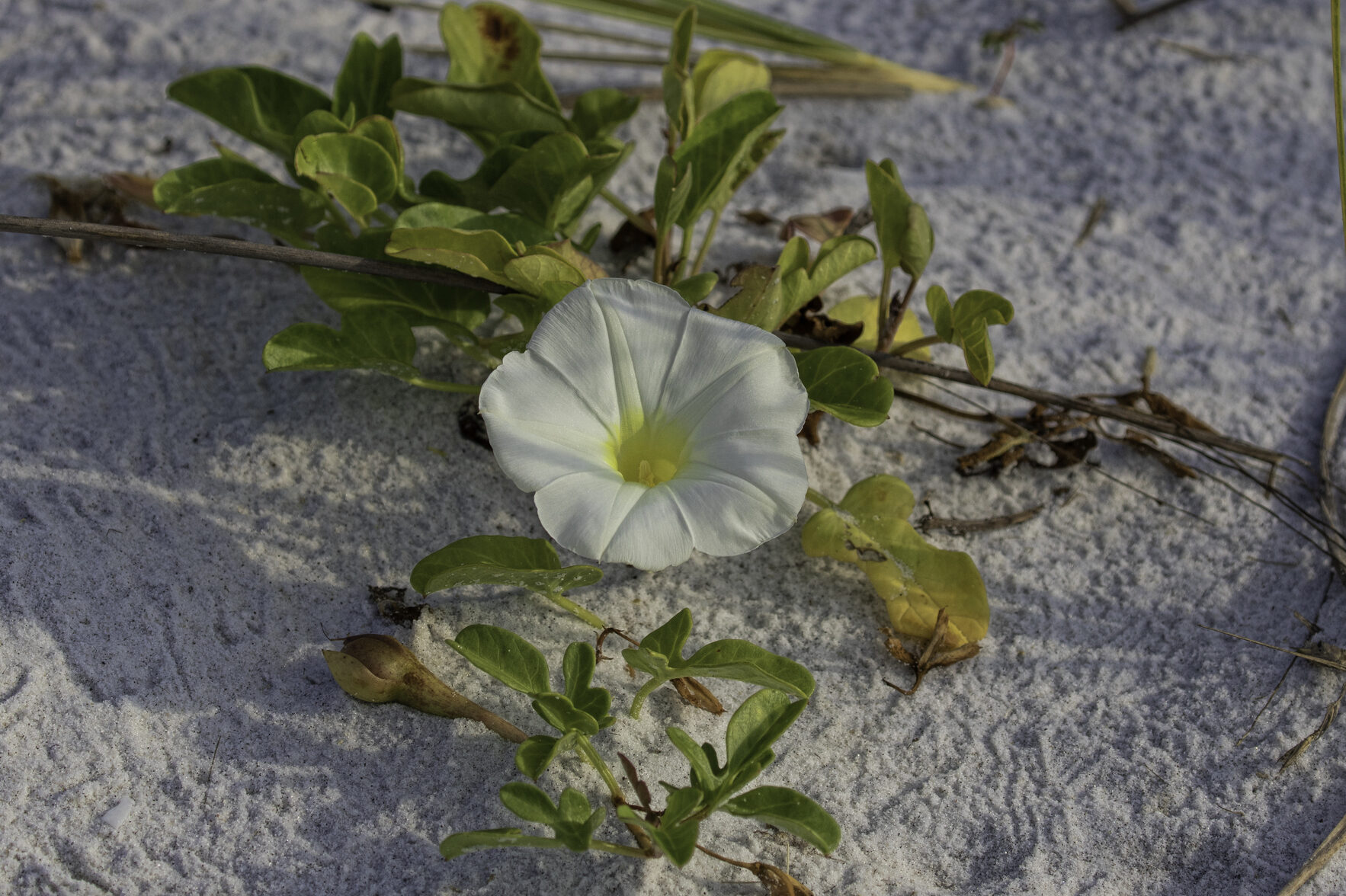
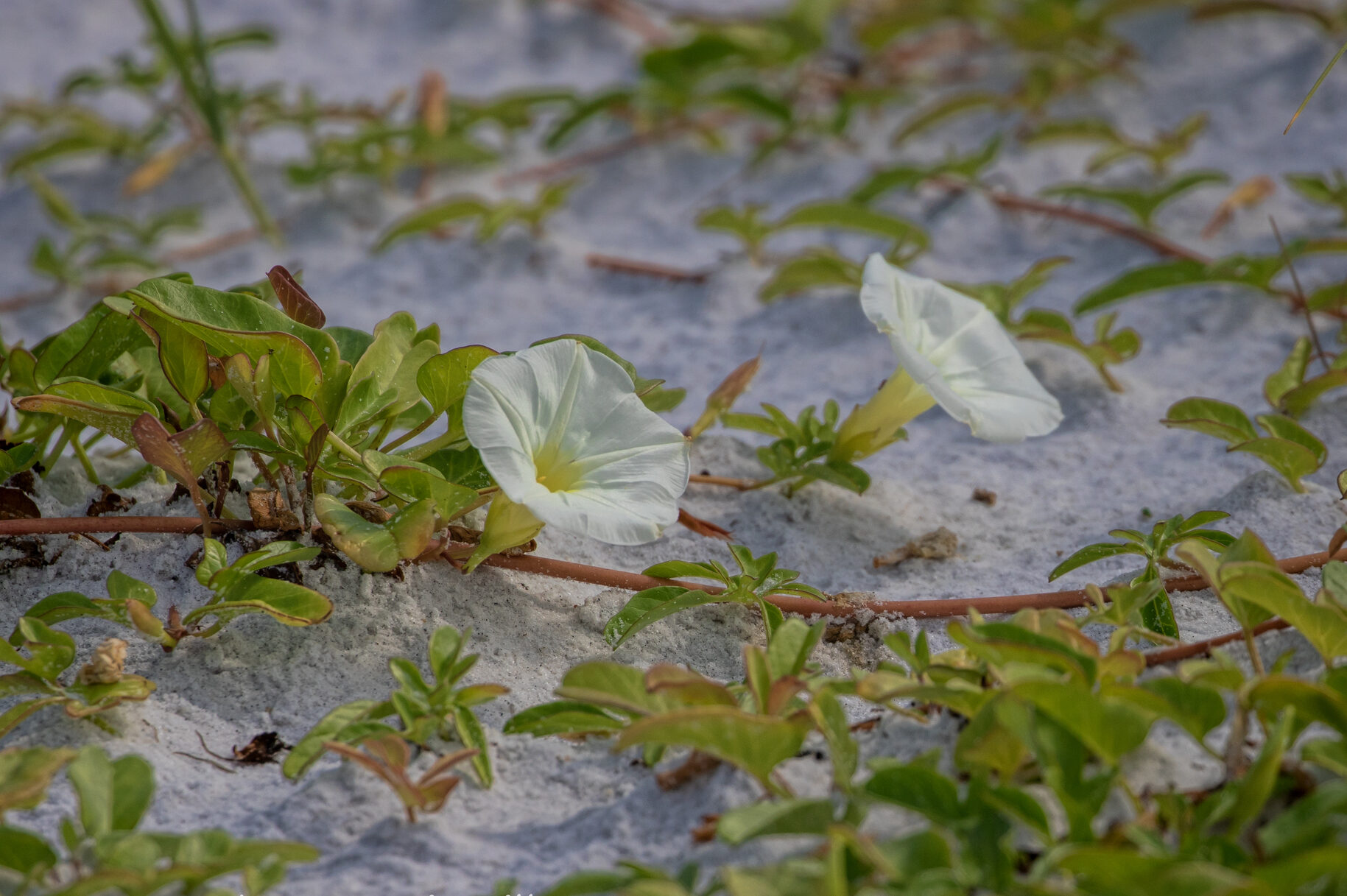
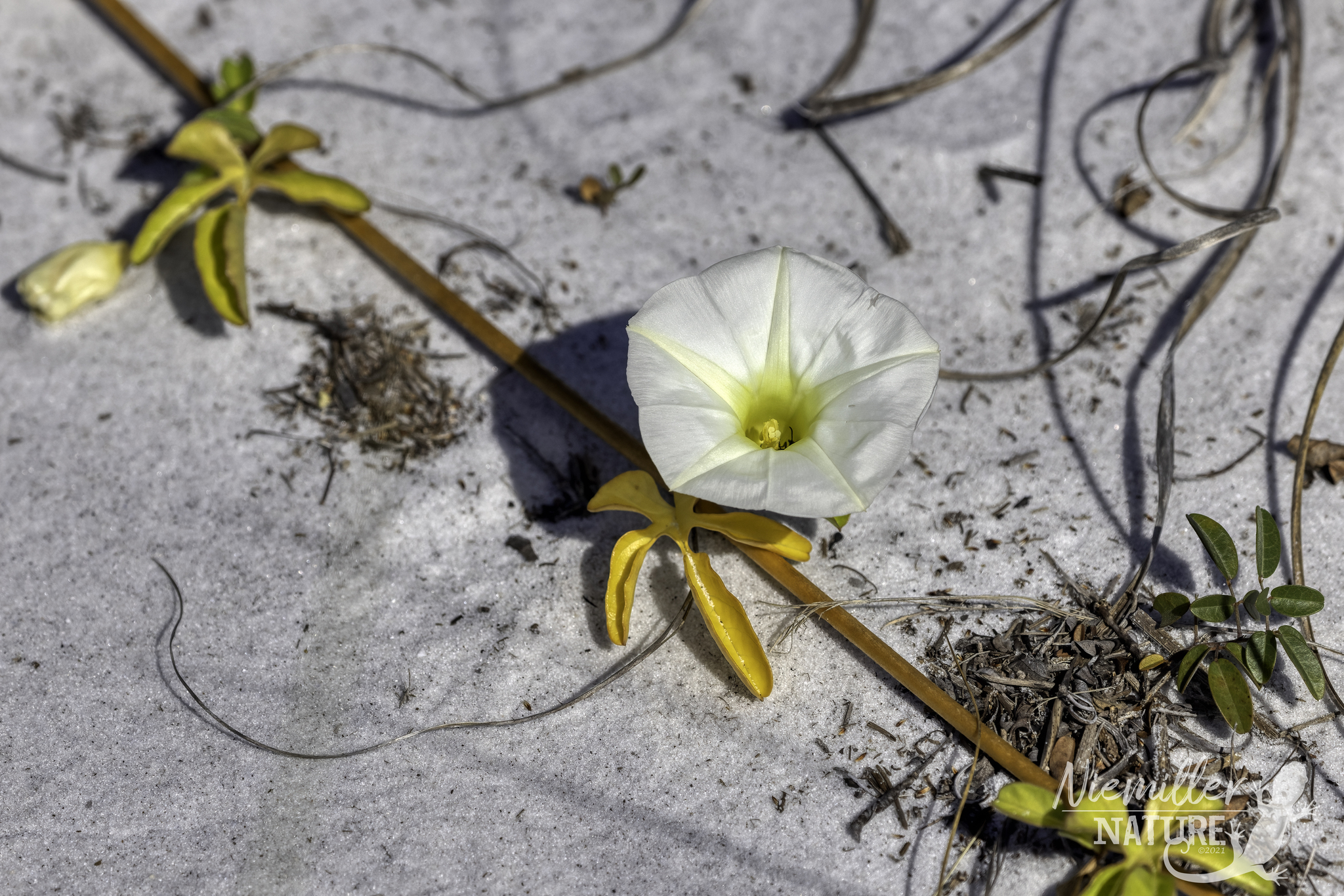
Beach Morning Glory is a perennial, sprawling vine that grows along coastal beaches and dunes. Its flowers are white with a yellow center that fades to purple, giving the bloom a soft, layered appearance. Flowers open in the morning and close by midday, a characteristic common to morning glories. The leaves are fleshy and variable in shape with some nearly round and others deeply lobed. This is an adaptation to reduce water loss in the harsh, sunny beach environment. The plant is a close relative of the sweet potato and produces long, trailing stems that can extend several meters across the sand.
Distribution
Beach Morning Glory has a nearly worldwide distribution along tropical and subtropical coastlines, including the Atlantic and Gulf coasts of North America from North Carolina to Texas. It is a characteristic plant of Gulf Coast beaches and is frequently encountered on undisturbed foredunes and back-beach zones across Florida, Alabama, Mississippi, Louisiana, and Texas.
Habitat
Beach Morning Glory grows in the coastal strand and foredune zones, which is the harshest part of the beach environment, exposed to salt spray, intense sun, shifting sand, and periodic burial by windblown sand. It is a pioneer species, meaning it is one of the first plants to colonize disturbed sandy areas. Its deep, extensive root system and tolerance for burial allow it to stabilize sand and contribute to dune formation, while also facilitating other plant species to colonize the area.
Ecology & Life History
Beach Morning Glory plays a critical ecological role in dune stabilization by spreading quickly across open sand and binding the surface with its roots and stems. Its flowers attract native bees and other pollinators. The seeds can float in seawater for extended periods, allowing the plant to colonize new beaches via ocean currents. Wildlife, including sea turtles, birds, and small mammals use Beach Morning Glory as cover. The plant’s tolerance for salt, drought, and sand burial makes it a model of coastal adaptation.
Conservation Status & Threats
Beach Morning Glory is not listed as threatened or endangered globally, but coastal populations face pressure from multiple directions. Coastal development and beach nourishment projects physically remove or bury vegetation. Increased foot traffic, off-road vehicles, and beach raking destroy stems and root systems. Introduced invasive plants can outcompete native coastal vegetation. Climate change, which may raise sea level and increase storm intensity, threaten the dune habitats where Beach Morning Glory grows. Protecting natural dune systems is key to this species’ continued presence on Gulf Coast beaches.