
Description
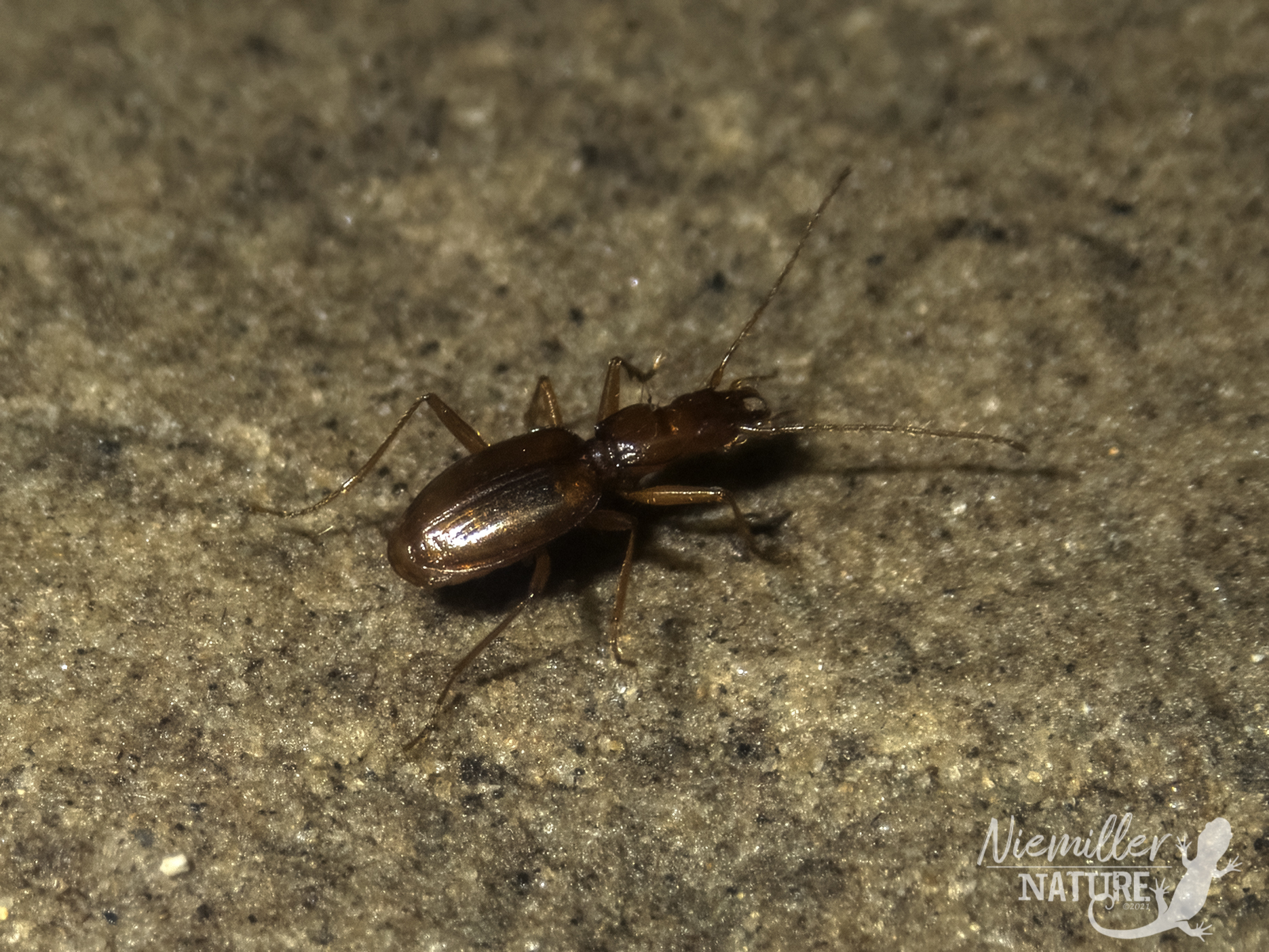
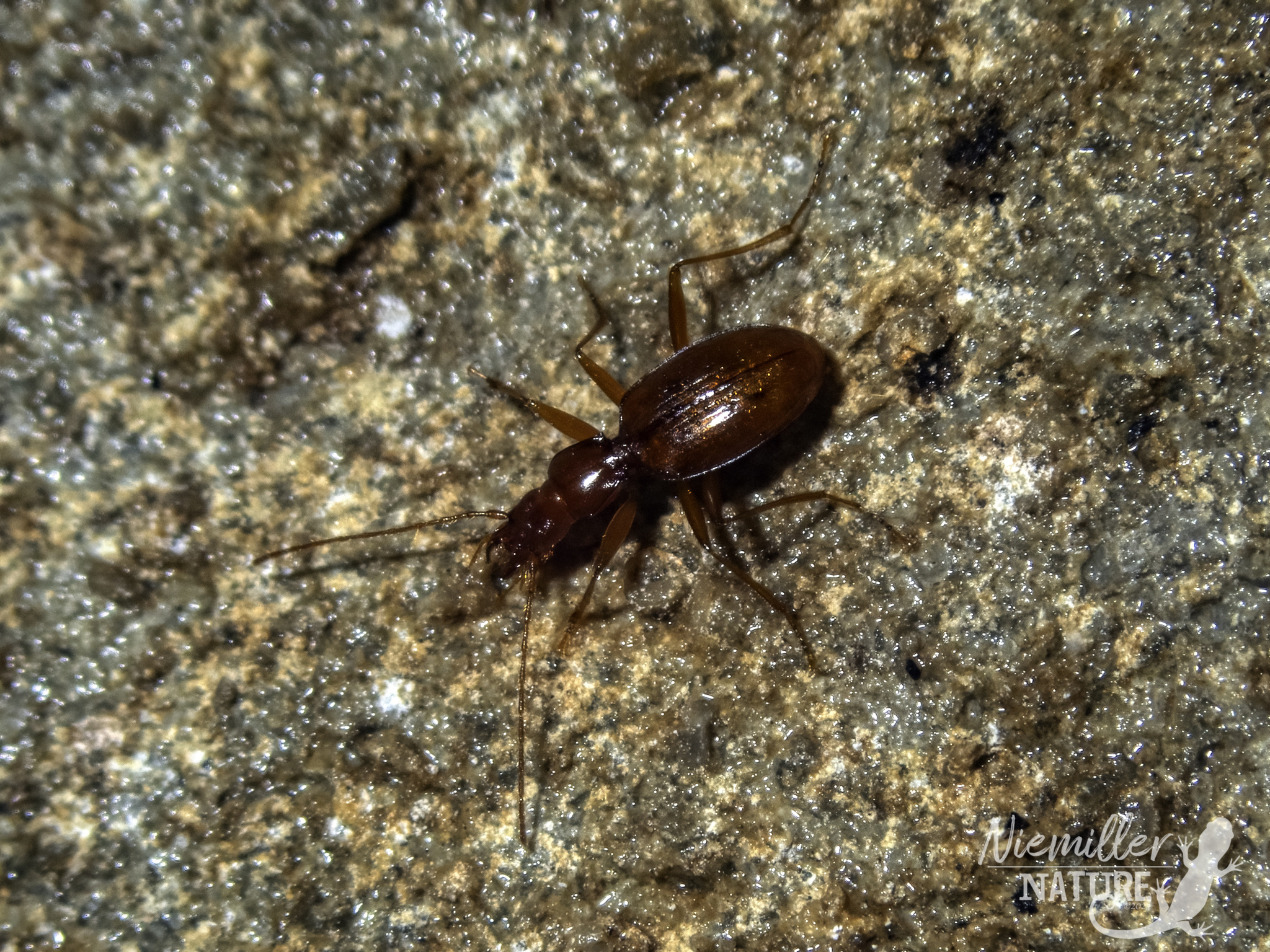
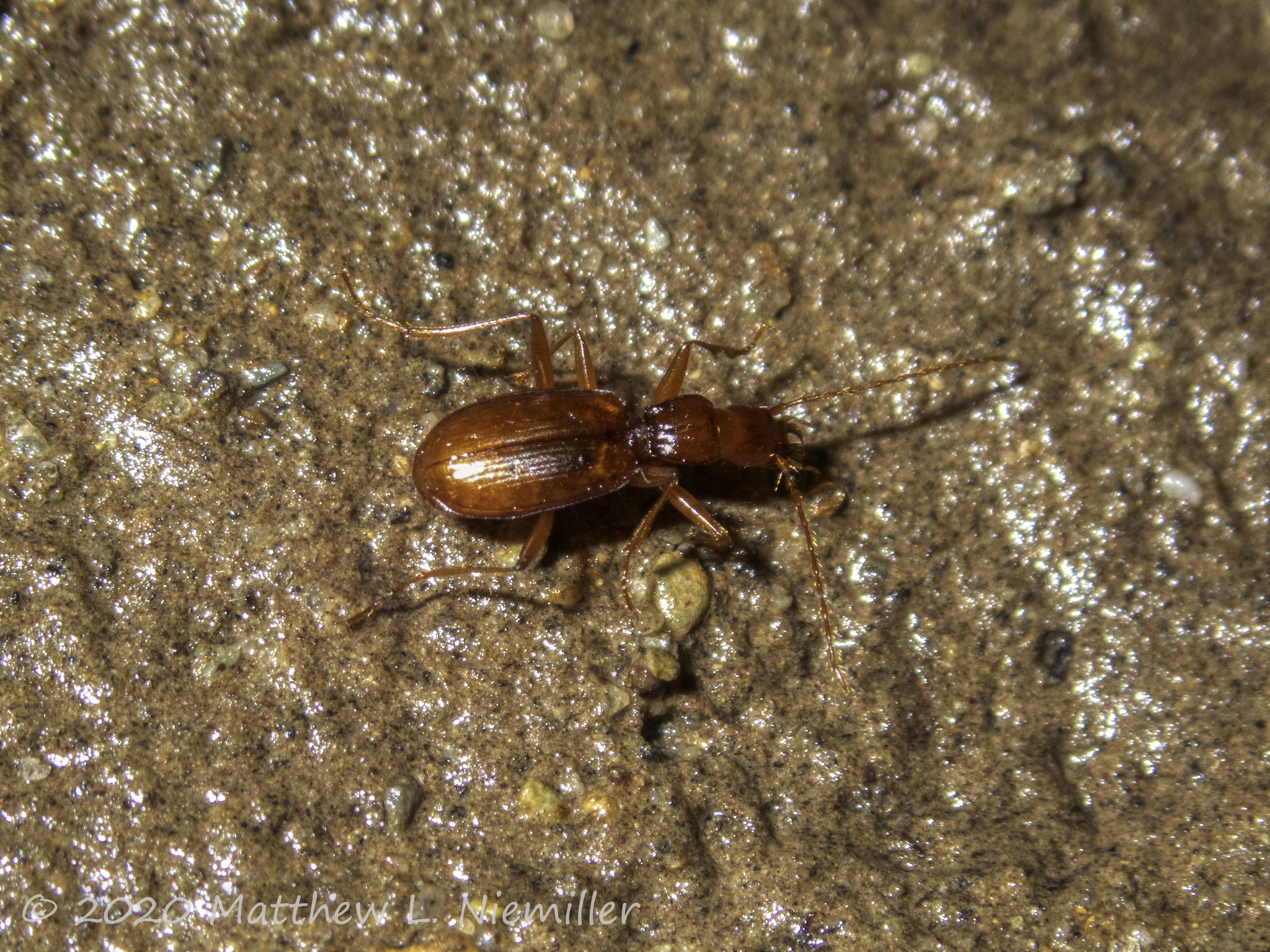
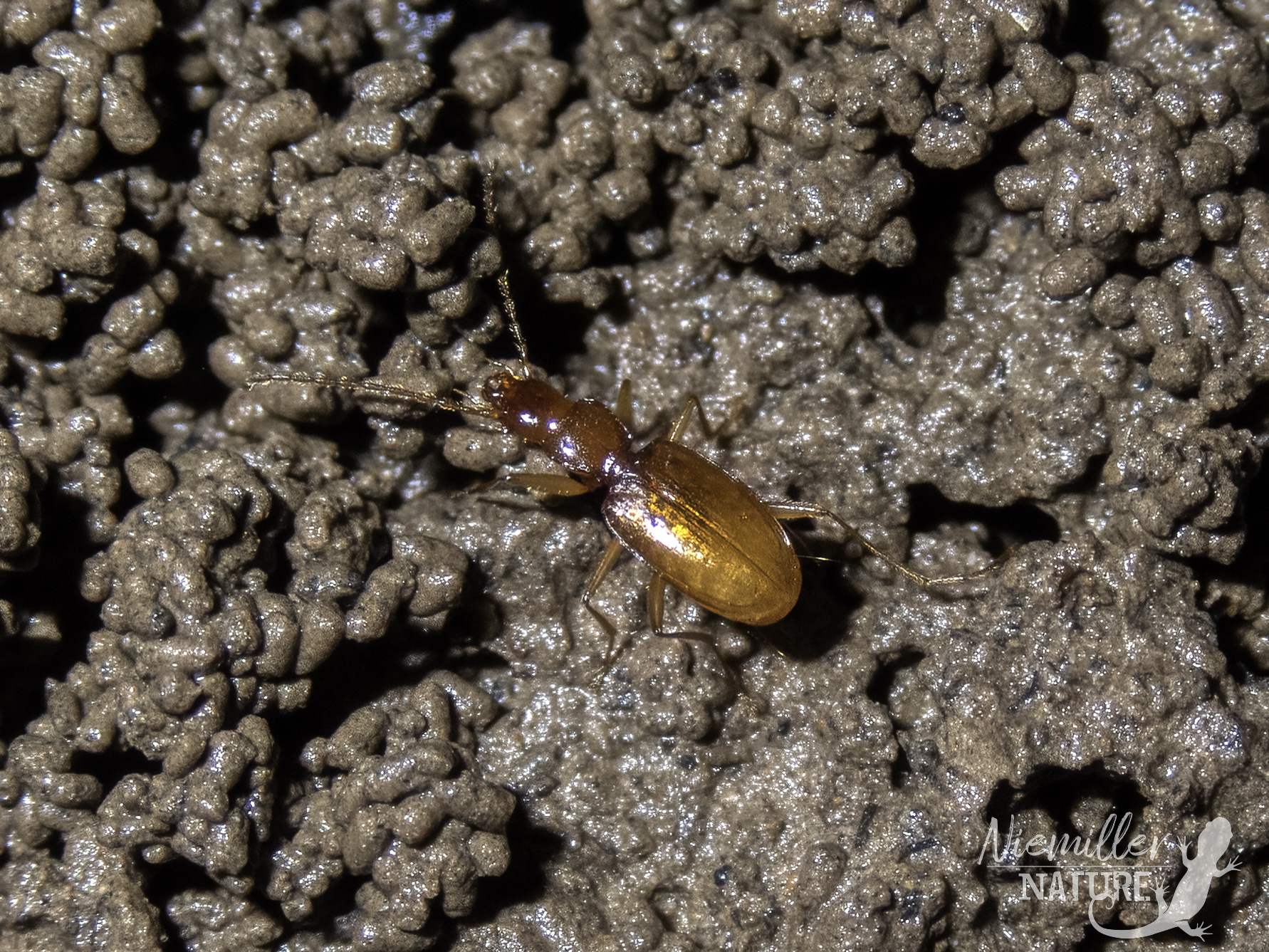
Cave beetles are tiny insects, usually only 3–7 millimeters long. Because they have lived in darkness for potentially thousands of generations, most species have lost their eyes entirely and are pale yellowish-white to reddish-brown in color. Their legs and antennae are noticeably longer and thinner than those of their surface-dwelling relatives, helping them navigate in the dark. Their wing covers are fused together, so they cannot fly. But in the cave environment, flight is unnecessary.
Scientists have described more than 145 species of Pseudanophthalmus, with at least 80 more thought to exist but not yet formally named. This makes the genus the most diverse group of cave beetles in the United States!
Distribution
Cave beetles in the genus Pseudanophthalmus are found primarily in the Appalachians and Interior Low Plateau karst regions of the eastern United States, from Virginia, West Virginia, Ohio, and Indiana southward to Tennessee, Alabama, and Georgia. Many individual species are extraordinarily range-restricted with some are known from only a single cave or a small cluster of nearby caves. This extreme endemism makes each species unique to its specific underground home.
Habitat
These cave beetles live deep within cave systems, in what scientists call the aphotic or dark zone — the area with absolutely no natural light. They prefer areas with stable cool temperatures, high humidity, and organic material, such as decaying leaves, animal droppings, or the remains of dead organisms that wash or fall into the cave. They are often found under rocks, in fine sediment, or among piles of organic debris near cave streams, but can also been seen actively scurrying along mudbanks and other riparian habitats.
Ecology & Life History
Cave beetles are predators and scavengers that hunt invertebrates, such as mites, springtails, and other small cave creatures. Because food is scarce underground, these beetles have evolved an extremely slow metabolism, a long lifespan (sometimes several years), and a very low reproductive rate. Despite laying few eggs, each one is large and well-provisioned. Cave beetles are considered troglobionts — animals fully adapted to cave life and unable to survive on the surface.
Conservation Status & Threats
No species of Pseudanophthalmus are currently listed under the U.S. Endangered Species Act. Despite lacking federal protection, Pseudanophthalmus species remain highly vulnerable. Their extreme rarity and tiny ranges make them highly susceptible to any disturbance. Key threats include groundwater pollution from agriculture and urban development, vandalism and trampling by cave visitors, removal of bat guano (which provides the food energy that supports many cave ecosystems), and climate change altering groundwater flow and cave hydrology.