Description
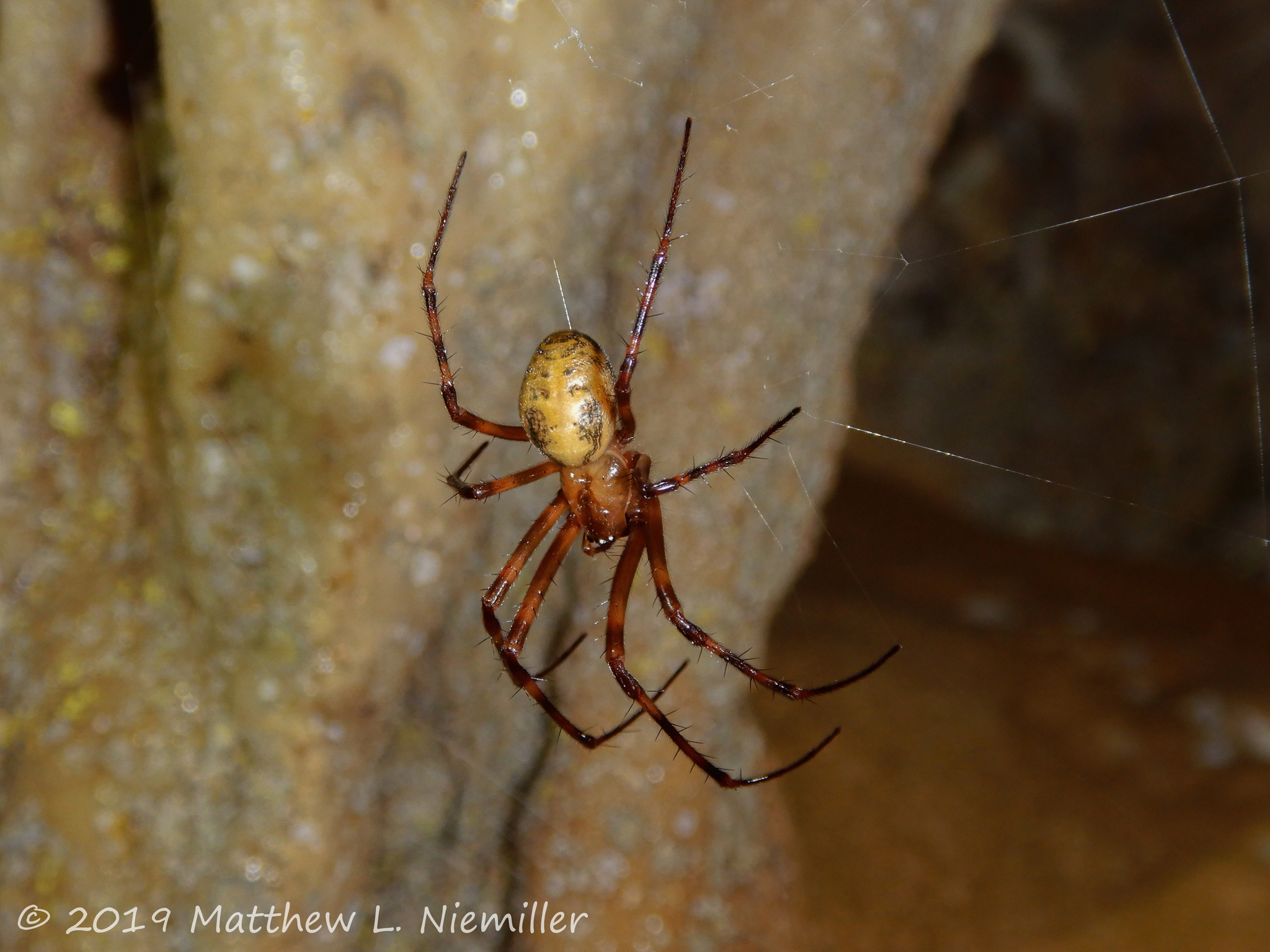
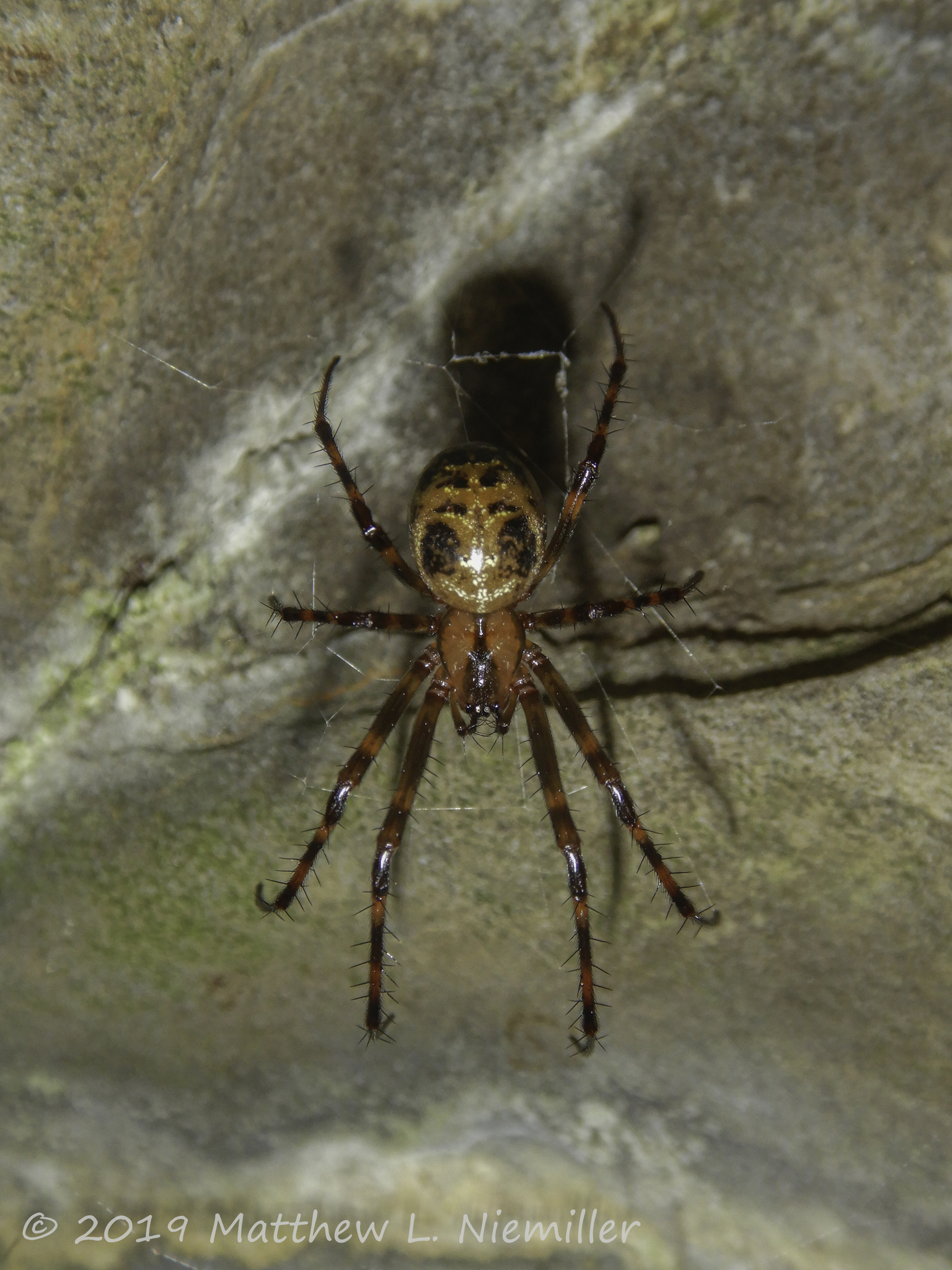
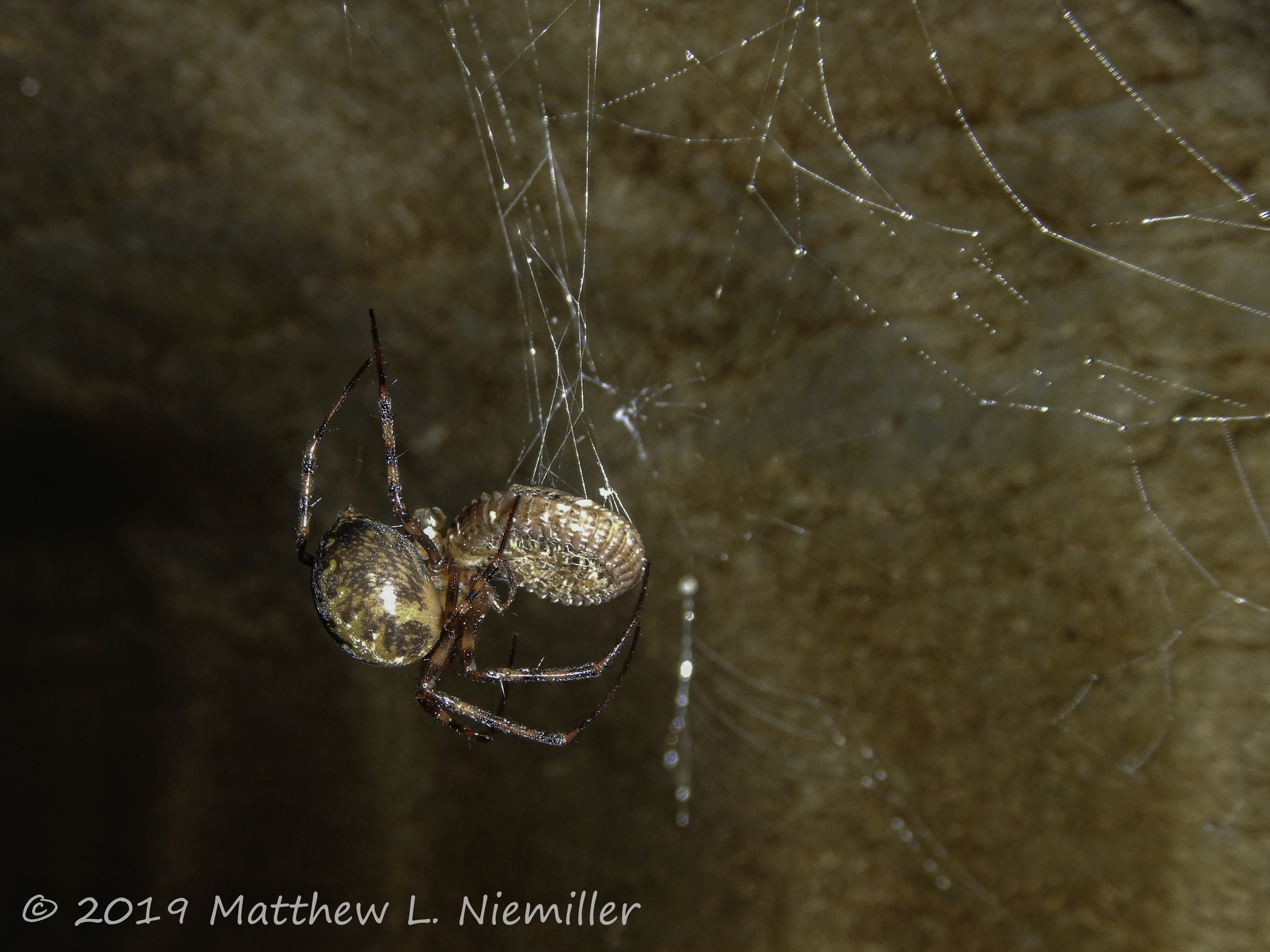
The Cave Orbweaver, also called the Eastern Cave Long-jawed Spider, is a medium-sized spider with a body length of about 7–15 millimeters. It has a pale yellowish-brown body with distinctly banded legs and a round, patterned abdomen. Despite being associated with caves, it retains functional eyes, which is an indication that it still benefits from some light exposure.
Distribution
Cave Orbweavers are found across eastern North America, ranging through the Appalachian region into the Ozarks and parts of the Midwest. It is associated with caves, abandoned mines, culverts, and other dark, sheltered, humid structures. It is considered one of the most cave-adapted spiders in North America, though it also occupies surface habitats near cave entrances.
Habitat
The Cave Orbweaver primarily inhabits the twilight zone of caves — the area just beyond the cave entrance where some light still penetrates. It favors spots with air currents that help deliver flying insects into its webs. It is also found near cave streams or dripping water, where humidity is high and insect activity is concentrated. In warmer months, it may be found on rock faces, culverts, or stream banks outside caves.
Ecology & Life History
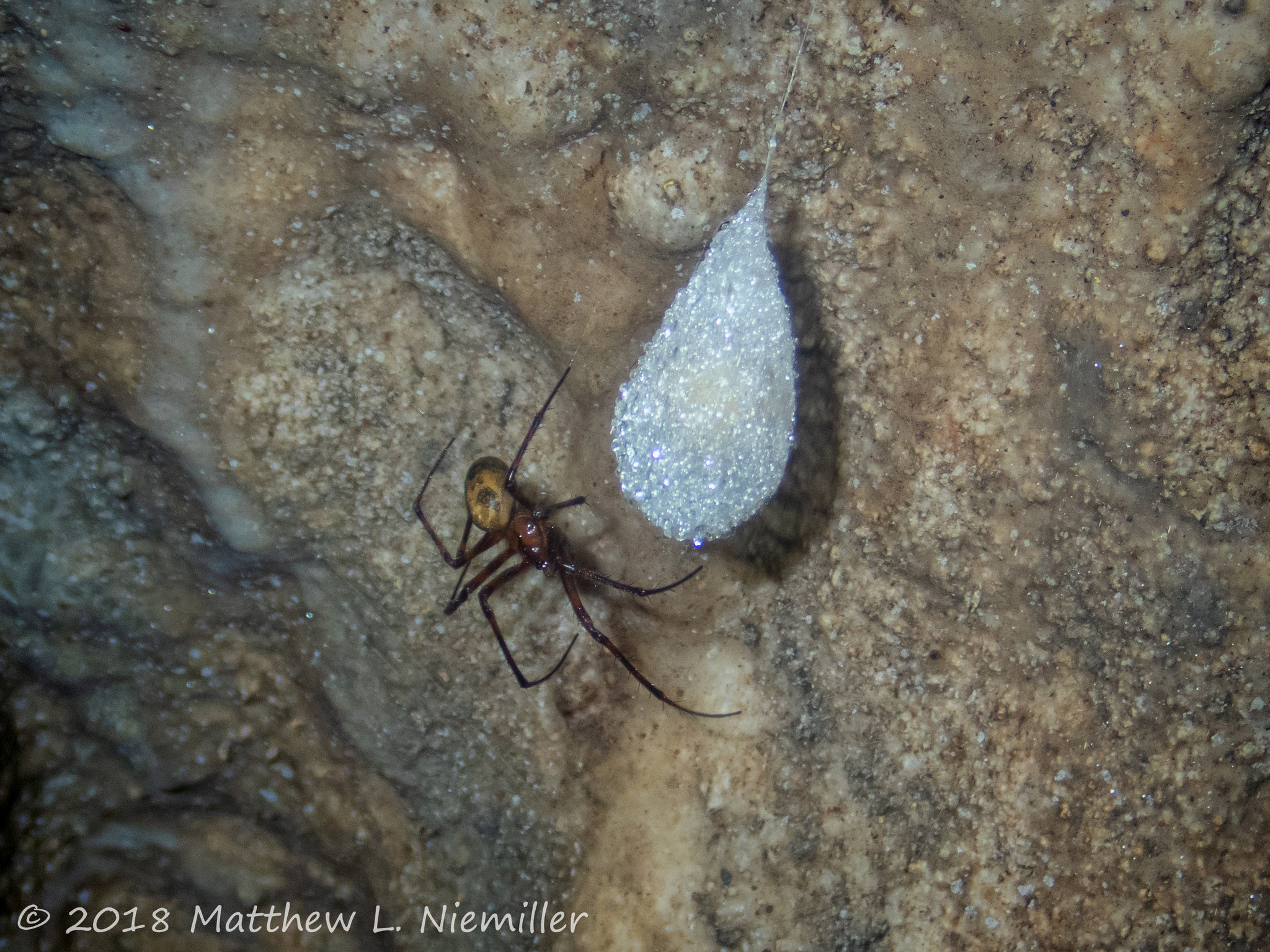
Cave Orbweavers are sit-and-wait predators that capture flying insects, including moths, gnats, and midges, that are attracted to or pass through cave entrances. They are active year-round in caves, where temperatures remain stable. They build classic spiral orb webs that are often found stretched across cave entrances, passages, or near flowing air currents. Their egg sacs overwinter in protected cave crevices, and the spiderlings hatch in spring. The Cave Orbweaver provides an important ecological link, transferring energy from the surface world into the cave ecosystem by capturing surface insects and eventually being eaten by cave predators.
Conservation Status & Threats
Cave Orbweavers are not currently listed as threatened or endangered and are considered Least Concern globally. However, like all cave-associated species, they are sensitive to changes in cave microclimates, such as increased air flow or drying caused by habitat alteration near cave entrances. Protecting cave entrance zones and maintaining natural hydrological conditions in karst landscapes benefits this and many other cave-associated species.