Description
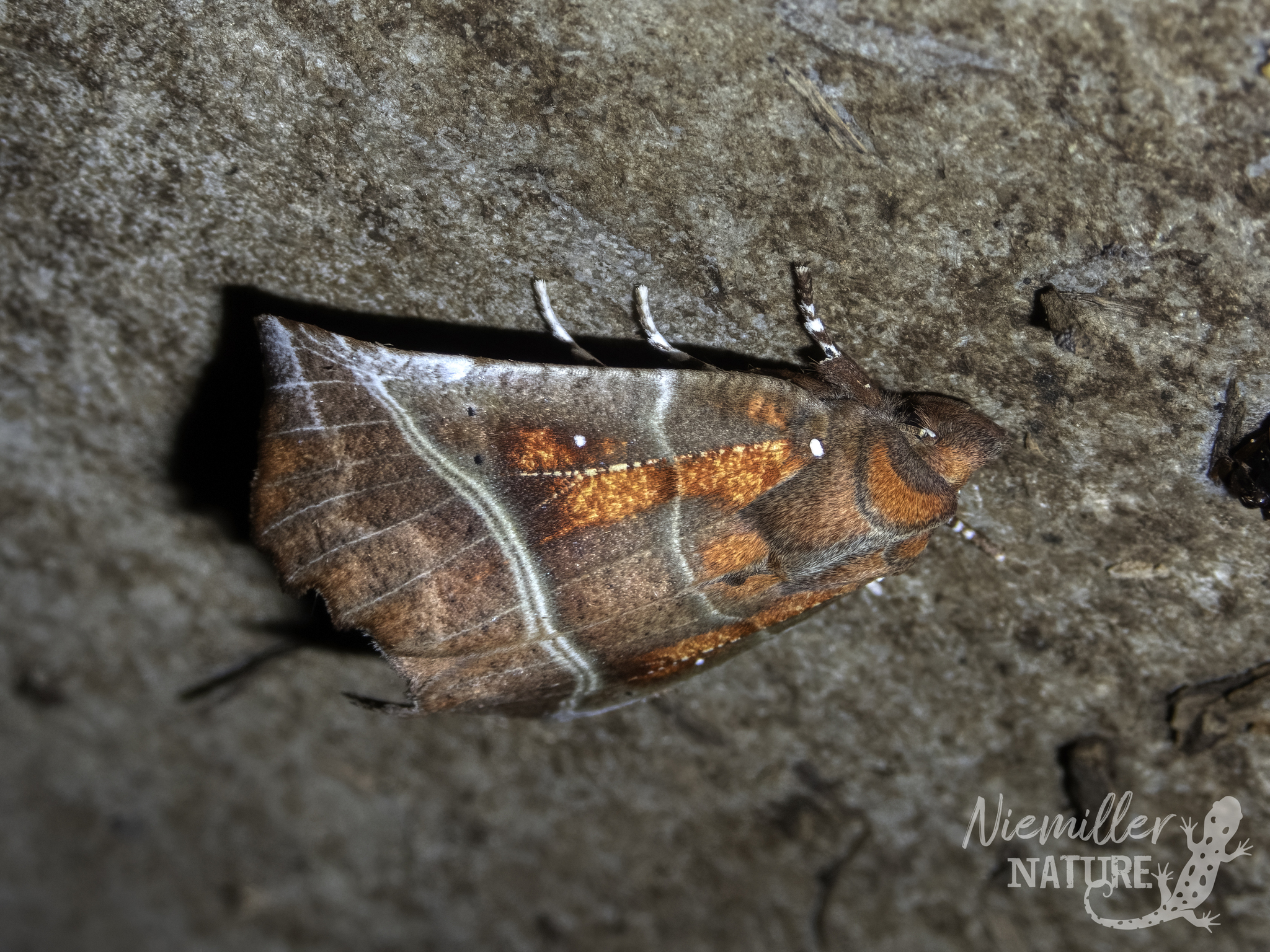
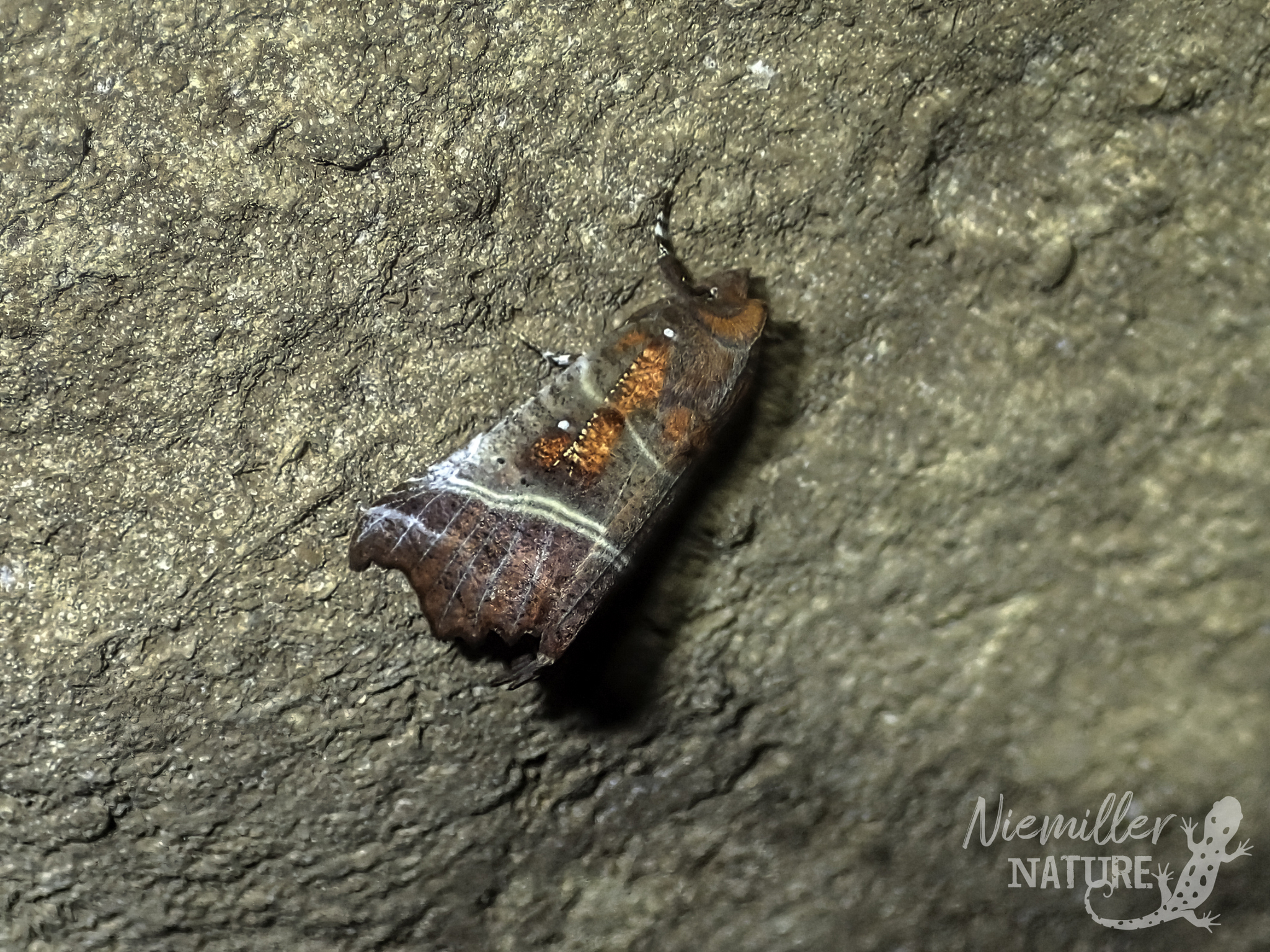
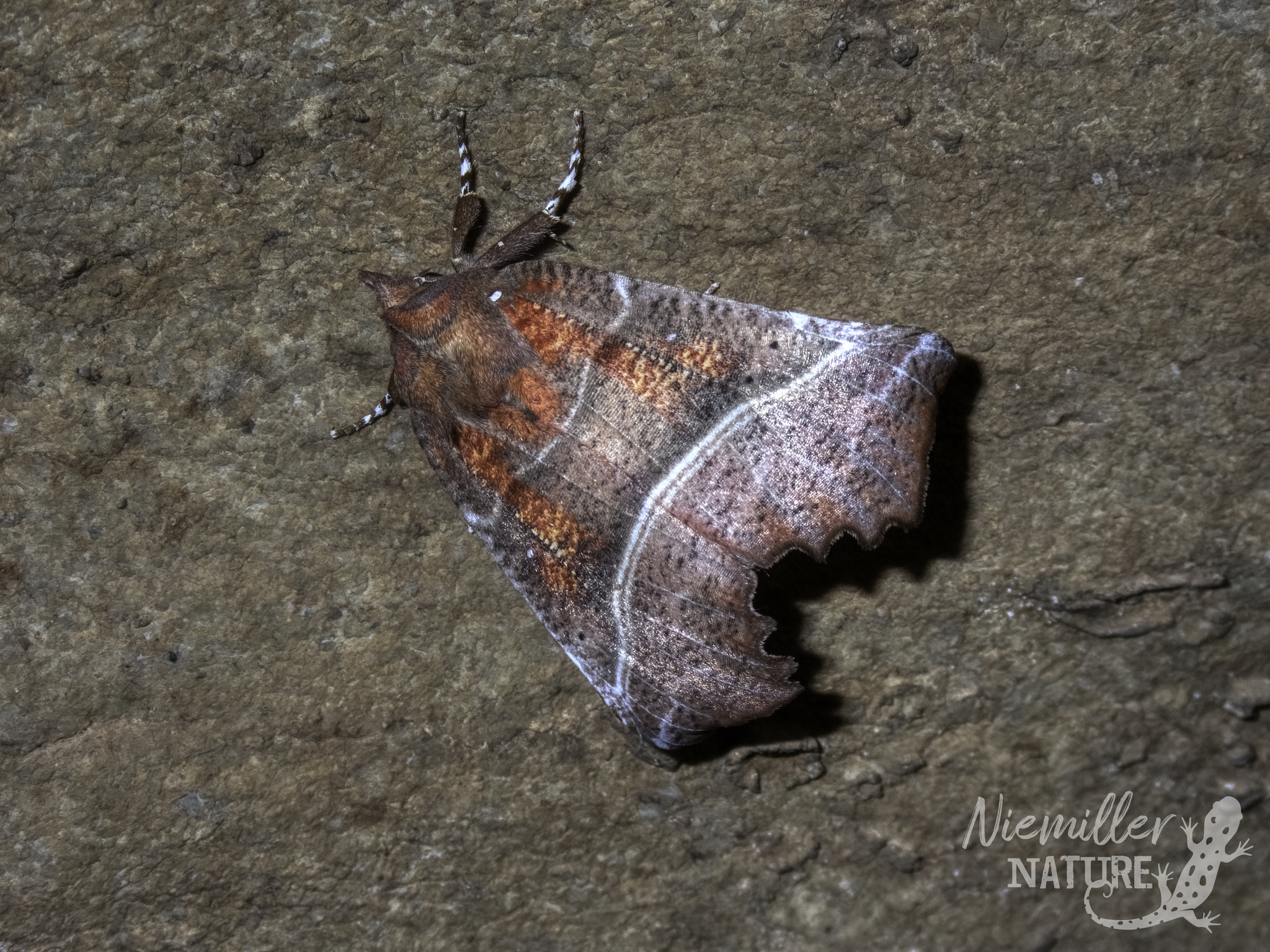
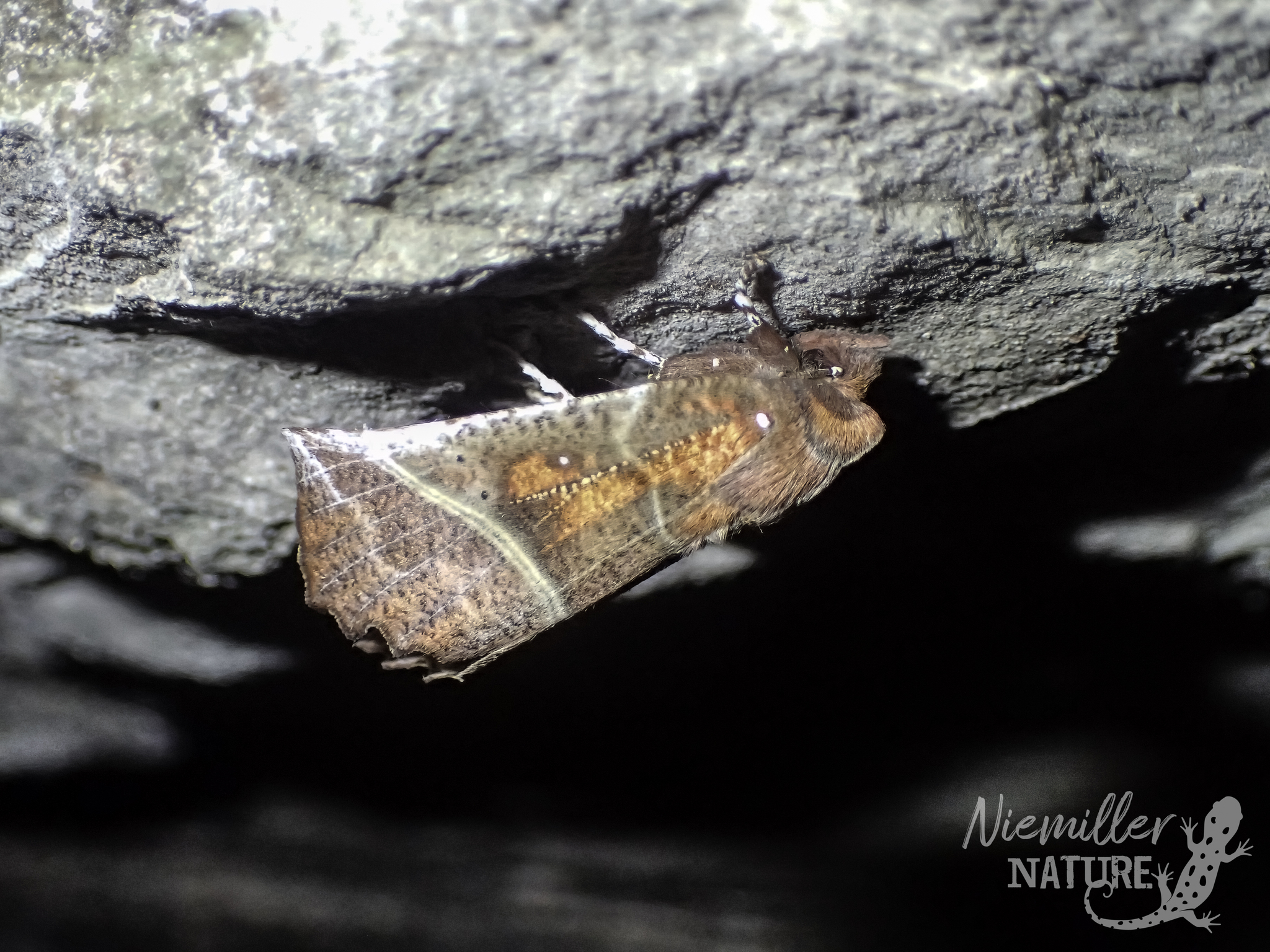
The Herald Moth is a medium-sized moth with a wingspan of about 40–45 millimeters. Its wings are rich brown with distinctive orange-rust patches near the base of the forewings and beautifully scalloped outer wing margins. The intricate pattern of its wings makes it easy to identify, and its resting posture in which the wings are held flat with the tips curled upward is quite distinctive. Despite its ornate appearance, the Herald Moth blends remarkably well with dead leaves and bark when at rest.
Distribution
The Herald Moth has one of the widest ranges of any cave-associated moth, occurring across much of northern North America as well as throughout Europe and Asia. In North America, it is found from coast to coast in the northern United States and into Canada. It is commonly recorded from caves across the eastern and central United States during the fall and winter months as far south as Alabama and Georgia.
Habitat
The Herald Moth is one of the few moths in North America that overwinters as an adult rather than as an egg or caterpillar. Adults enter caves, abandoned mines, hollow trees, and old buildings in the fall to hibernate through the winter in a state of torpor. They can be found on the ceilings of caves and mines usually closer to entrances. In spring and summer, adults are active in a wide range of habitats including forests, riverbanks, and woodland edges wherever host plants for the caterpillars are found.
Ecology & Life History
The larvae (i.e., caterpillars) of Herald Moths feed on the leaves of willows, poplars, and related trees. Adults emerge in late summer and must feed on nectar and rotting fruit to build up fat reserves before entering their winter hibernation. Inside caves, they cluster in small groups on cave walls and ceilings, entering a state of low metabolic activity to survive the cold months. During hibernation, they are an important food source for cave predators, like salamanders. Their presence in caves is seasonally predictable, making them a reliable energy source for cave ecosystems.
Conservation Status & Threats
Herald Moths are not of conservation concern, and their populations are stable across most of their range. Although they are not considered threatened, these moths are sensitive to pesticide use that can reduce their caterpillar host plants or directly harm larvae. The loss of riparian habitat (streamside forests with willows and poplars) may locally reduce populations. Protecting cave hibernation sites from disturbance during winter is important not only for Herald Moths but for the bats and other organisms that share those spaces.