
Description
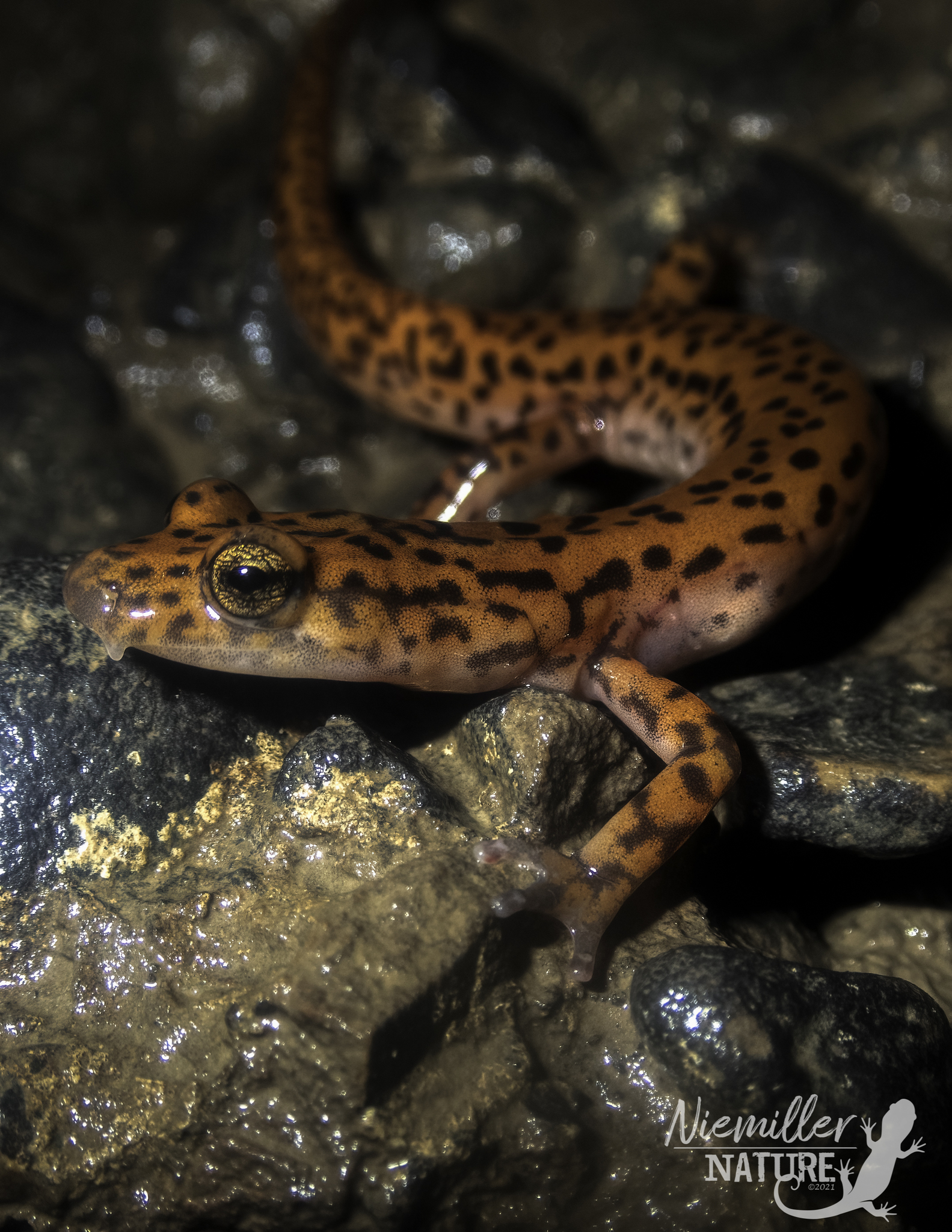
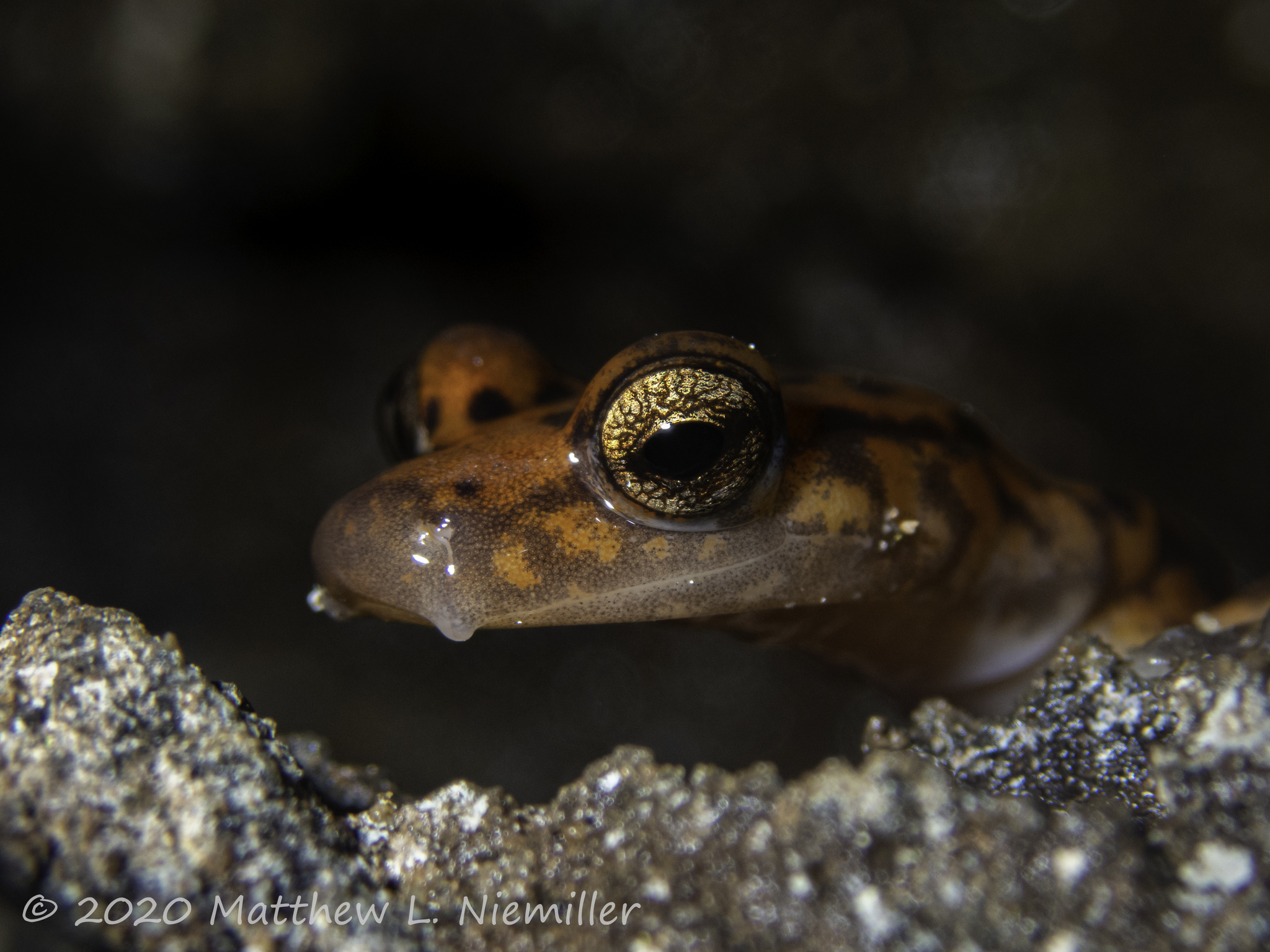
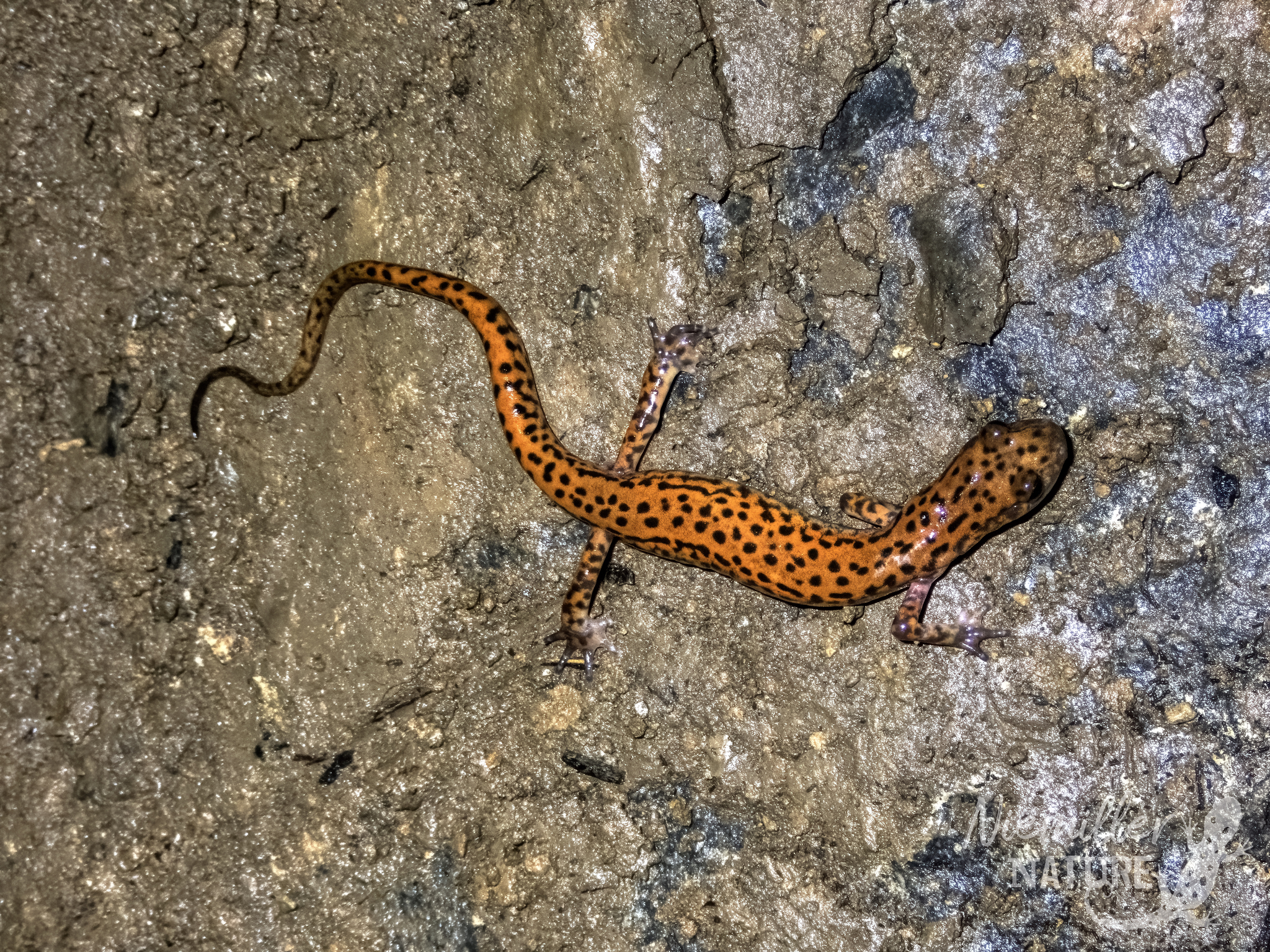
The Cave Salamander is a slender, striking amphibian that ranges from 10 to 18 centimeters in length. Its most eye-catching feature is its vivid orange to reddish-orange body covered with irregular black spots. Unlike fully cave-adapted salamanders, the Cave Salamander has well-developed, functional eyes and retains a bold coloration, which is an indication that it spends significant time near cave entrances where light is present. It has a long, prehensile tail that it uses for gripping surfaces while moving through rocky terrain.
Distribution
Cave Salamanders are found across the eastern and central United States, ranging from Virginia and West Virginia south to Alabama and Georgia and west to Arkansas, Missouri, and Oklahoma. Their distribution closely follows the limestone cave regions of the Appalachians, Interior Low Plateau, and Ozarks karst regions. They are the most widespread cave-associated salamander in North America.
Habitat
Cave Salamanders are troglophiles that use caves regularly but also occupy surface habitats. Inside caves, they prefer the entrance and twilight zones, clinging to walls and ceilings of moist, rocky passages, but they also can be found in the dark zone. On the surface, they are found near cave entrances, on mossy cliff faces, under rocks along stream banks, and in wooded areas with rocky outcrops.
Ecology & Life History
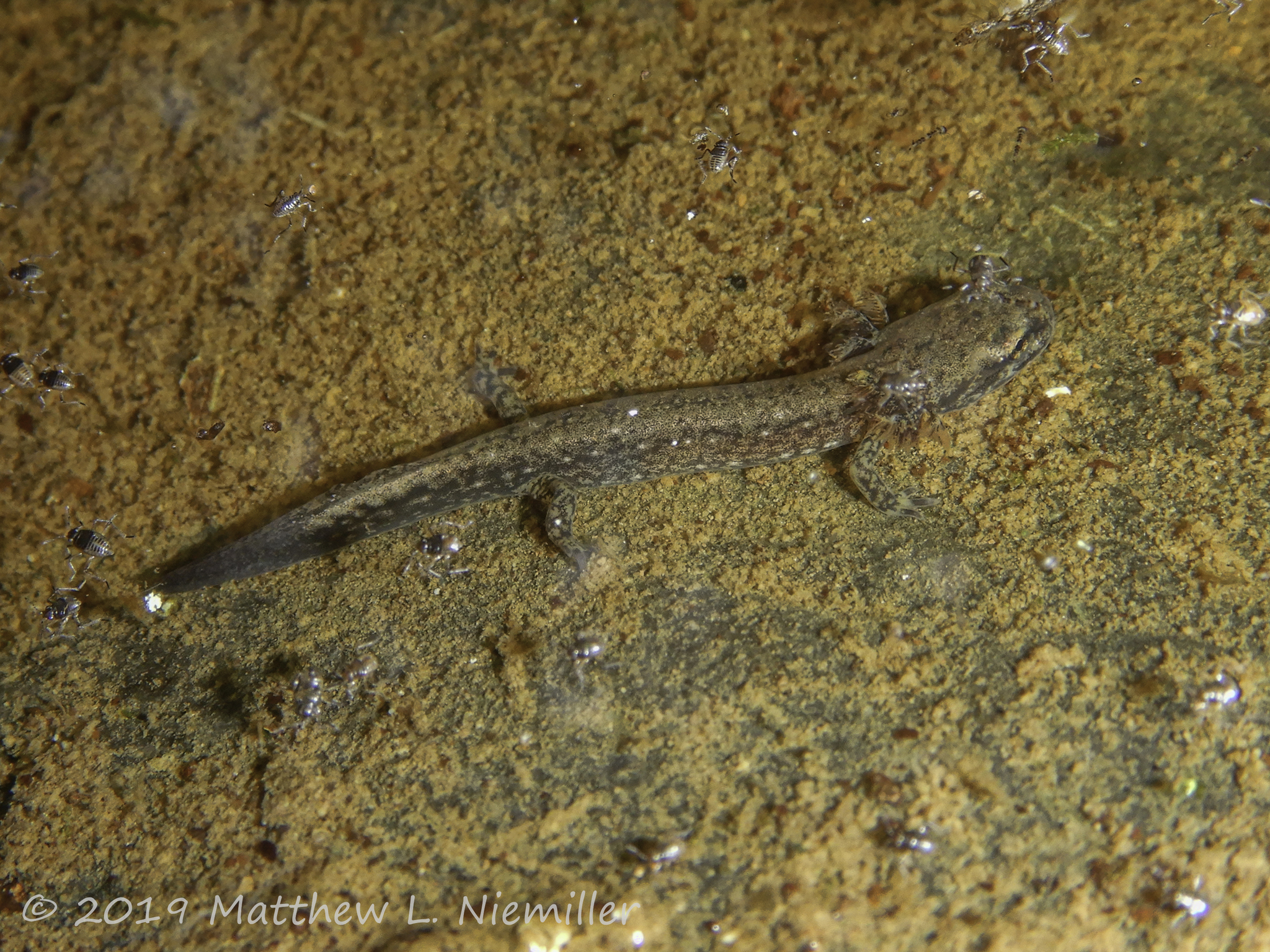
Cave Salamanders are ambush predators that feed on a variety of invertebrates, including crickets, beetles, mites, millipedes, and spiders. They are agile climbers and often hunt by clinging to cave walls or overhanging rocks, waiting to snap up passing prey. Their bright coloration may serve as a warning signal (i.e., aposematism), advertising that they produce mild skin toxins. Unlike many species of salamanders, Cave Salamanders lay their eggs singly in cave rimstone pools or quiet pools in cave streams and do not guard the eggs after they are laid. Their larvae develop in cave streams before metamorphosing into the terrestrial adult form. Cave Salamanders serve as both predators and prey, linking the cave and surface food webs.
Conservation Status & Threats
The Cave Salamander is ranked as Least Concern by the IUCN, and Secure by NatureServe. Their populations appear relatively stable across most of their range. However, they are sensitive to water quality in cave streams, making them useful indicator species for the health of karst groundwater systems. Local threats include groundwater contamination, sedimentation of cave streams from land clearing, and alteration of cave entrances. Some regional populations may be declining due to habitat loss and changes in land use.