Description
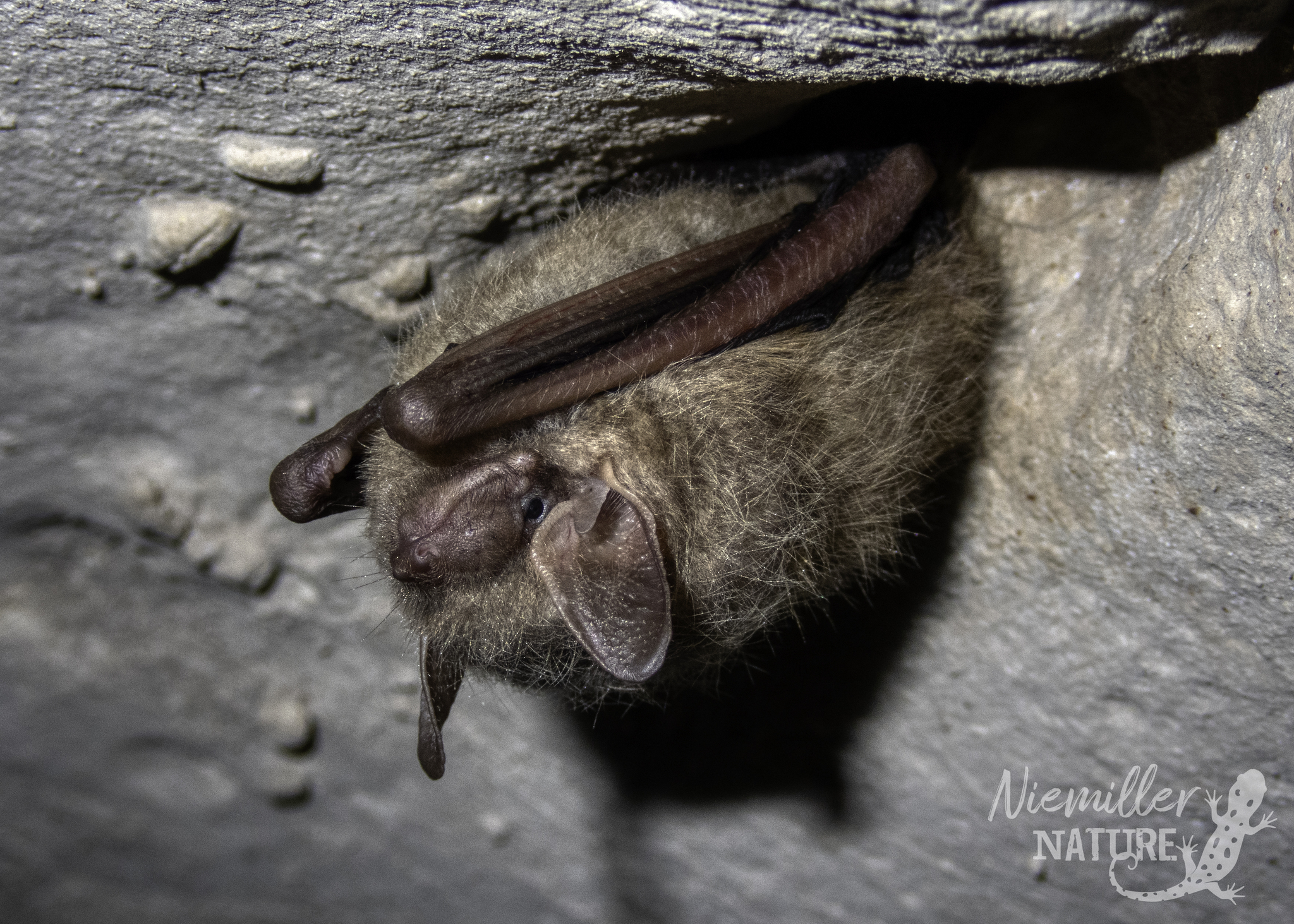
The Tricolored Bat is one of North America’s smallest bats, with a wingspan of about 21–26 centimeters (8.3–10.2 inches) and weighing only 4.6–7.9 g. Its fur is uniquely tricolored whereby each hair has a dark base, a yellowish-tan middle band, and a brown tip. Its face and bare skin are pinkish-tan. In flight, the Tricolored Bat has a slow, fluttery, almost butterfly-like style compared to other bats. It has small, rounded ears and a short, blunt tragus (the small projection inside the ear).
Distribution
Tricolored Bats are found throughout eastern North America, from southern Canada south through the eastern and central United States into Central America. They are year-round residents in much of the southeastern U.S. and use caves for winter hibernation across the Appalachians, Interior Low Plateau, and Ozarks karst regions.
Habitat
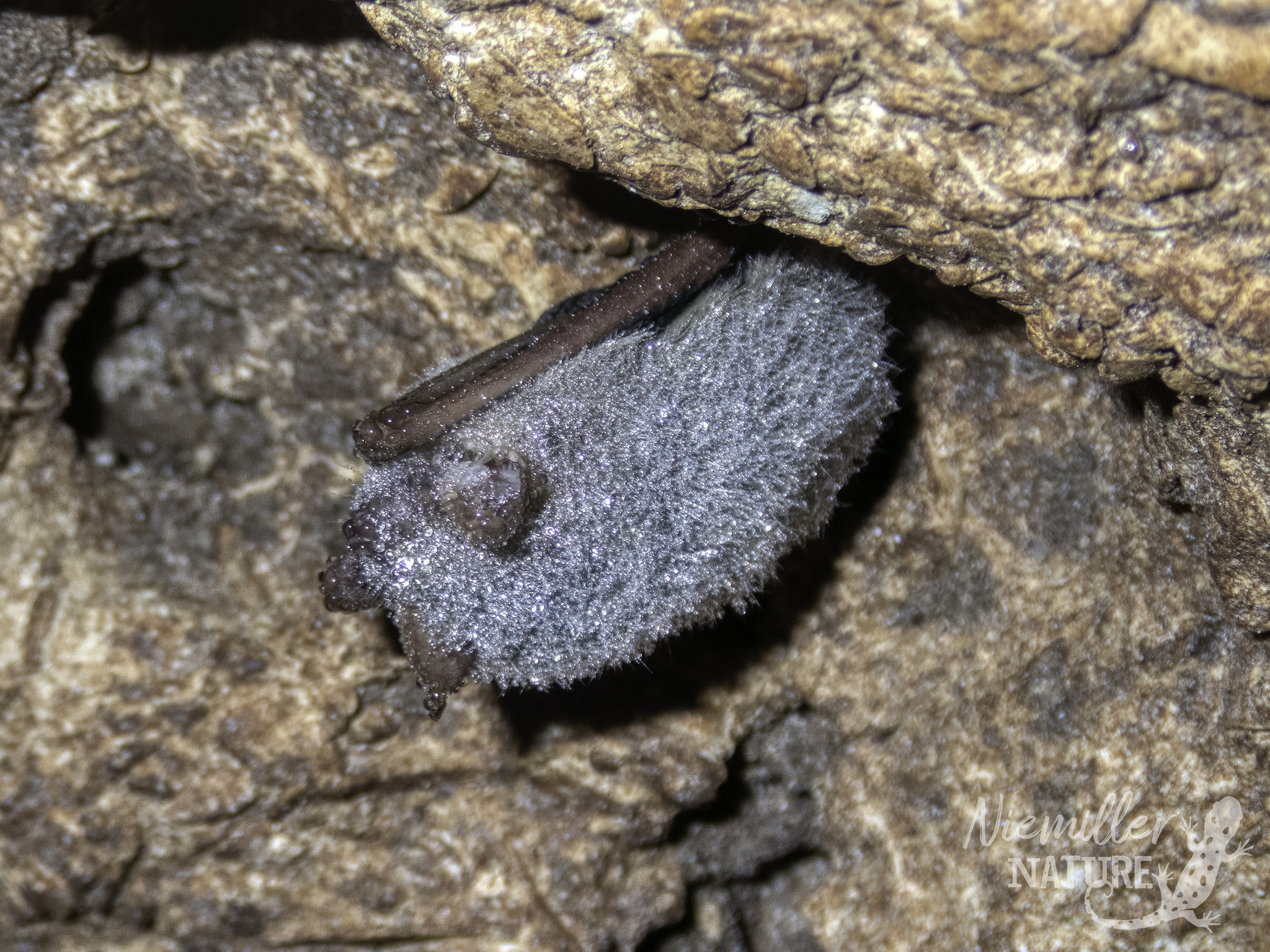
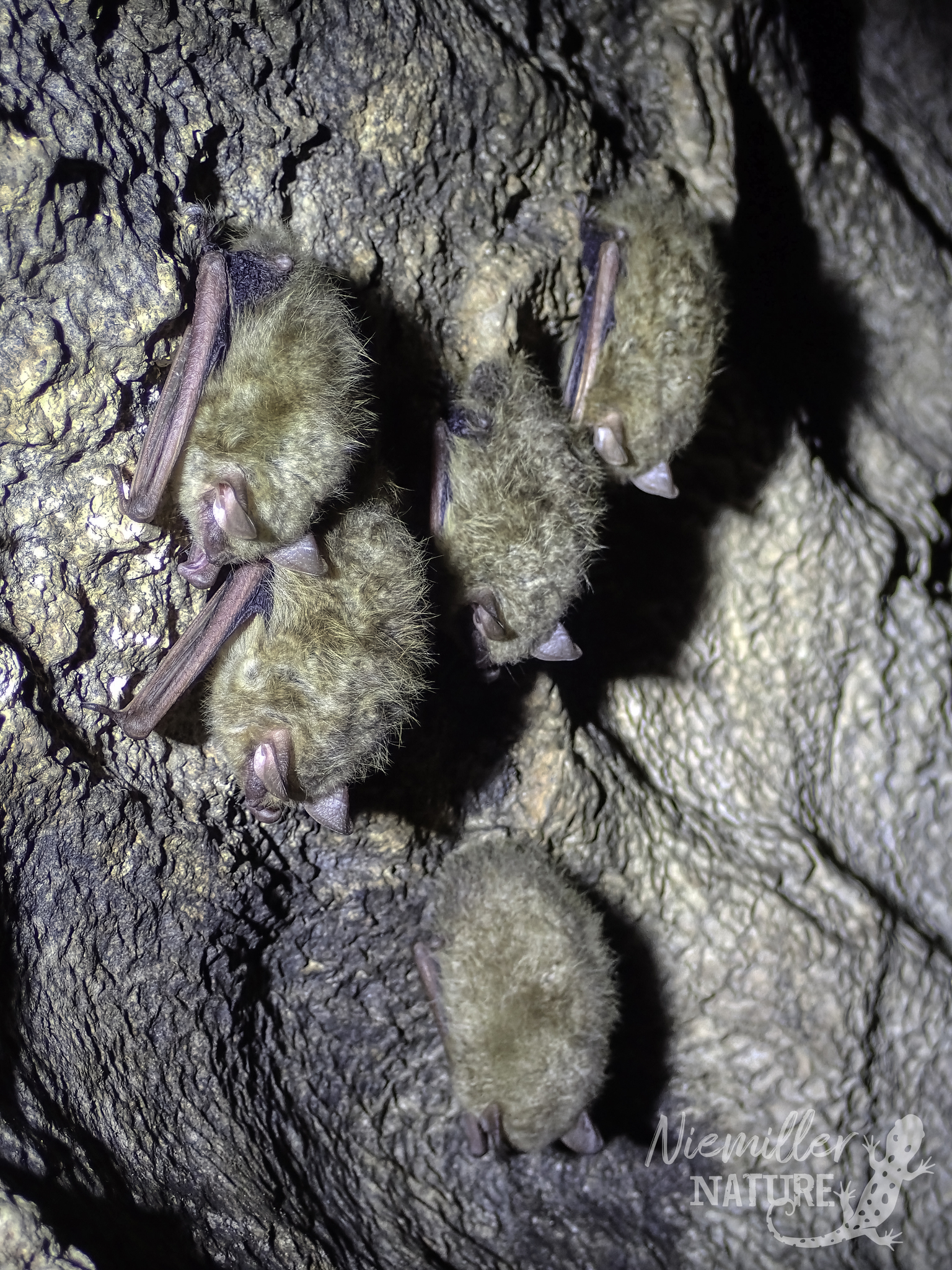
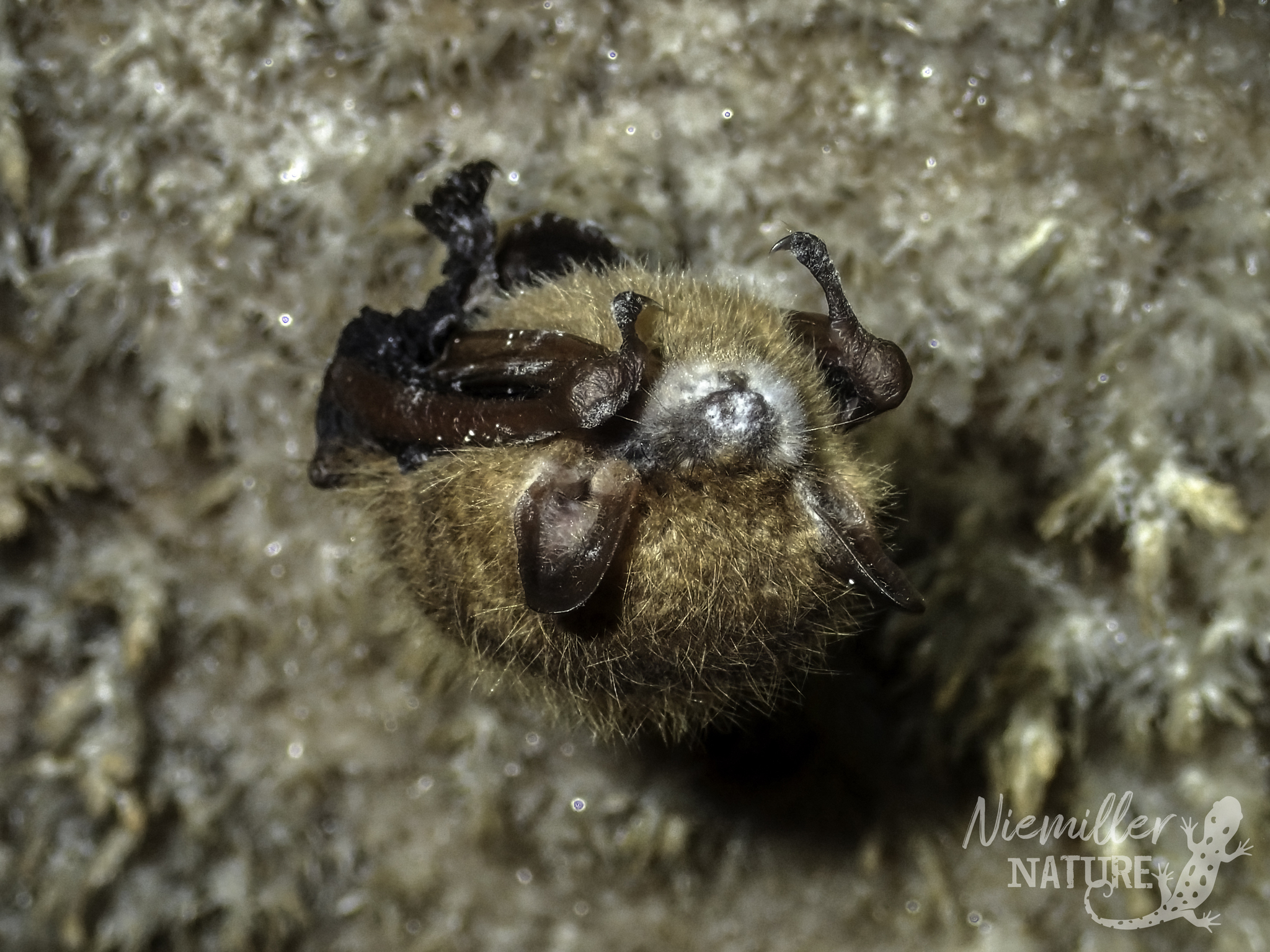
In summer, Tricolored Bats roost in tree foliage, under bark, or in Spanish moss, remaining surprisingly well camouflaged among dead leaves. In the fall and winter, they hibernate in caves and mines (called hibernacula), often roosting alone or in small groups on cave walls and ceilings. They typically enter hibernation earlier in fall and exit later in spring than most other bat species.
Ecology & Life History
Tricolored Bats are insectivores that hunt flying insects at night using echolocation. They produce ultrasonic calls and listen to the returning echoes to detect prey. They favor small insects, such as midges, mosquitoes, moths, and leafhoppers, often hunting along forest edges and over water. A single bat can consume hundreds of insects per night, making bats enormously valuable for natural pest control. Tricolored Bats give birth to one or two pups in late spring or early summer.
Conservation Status & Threats
The Tricolored Bat is proposed for listing under the U.S. Endangered Species Act as Endangered. The species is ranked as Vulnerable by the IUCN and Vulnerable by NatureServe. The primary threat is White-Nose Syndrome (WNS), a fungal disease caused by the pathogen Pseudogymnoascus destructans that was introduced from Europe. WNS has killed millions of North American bats since 2006, with some tricolored bat populations declining by more than 90%. Additional threats include wind energy development, habitat loss, and cave disturbance during hibernation.